
Bread Proofing Cloth for Boules: A Step-by-Step Guide
Last Updated: November 8, 2026
Quick Summary
To use a bread proofing cloth for boules, lay it flat, dust it evenly with flour, and set the shaped dough seam-side up in the center. Gather the fabric loosely around the sides like a hammock, leaving slack, then let the boule rise until puffy. To transfer, slide a hand under the cloth and gently flip the bundle onto your peel so the seam ends up down.
- Flour the cloth in two passes: a light overall dusting, then a heavier pinch in the center.
- A boule is ready when a floured finger dent springs back slowly and leaves a slight impression.
- Most kitchen-temperature rises land between one and three hours, but judge by the poke, not the clock.
- Rice flour gives the best release because it stays powdery and does not hydrate like wheat flour.
- Do not wash your linen couche after every bake; scrape off dried dough and hang it to air.
Table of Contents
- Why a Cloth Works Better Than a Bowl for a Round Boule
- How to Use a Baker's Couche: A Step-by-Step Boule Method
- Linen Cloth for Bread Proofing: Why Fabric Choice Matters
- A Couche Cloth Alternative When You Don't Own a Couche
- Flour Choice and Sticking Troubleshooting
- Cloth vs. Banneton for Boules: Which Should You Use?
- How to Clean a Bread Couche and Store It Between Bakes
- Pick Up a Proofing Cloth and Bake Your First Cloth-Rested Boule
- Frequently Asked Questions
Why a Cloth Works Better Than a Bowl for a Round Boule
A bread proofing cloth is a piece of woven fabric, usually linen or cotton, that cradles shaped dough during its final rise.
The bowl is the problem. A smooth bowl lets a wet dough slide and flatten under its own weight. Fabric adds gentle friction. It supports the sides, holds the seam in place, and lets the loaf rise up instead of out.
The Bread Baking Guide from King Arthur Baking makes the same point about dough support during proofing: the vessel has to match the shape you want.
Round loaves have no edges to lean on. They need a cradle.
- Bare bowl: dough spreads, seam relaxes, shape flattens
- Floured cloth: dough grips, rises upward, holds a tight round
- Cloth also wicks away surface moisture so the skin sets properly
A cloth is reusable and takes up little drawer space.
How to Use a Baker's Couche: A Step-by-Step Boule Method
Learning how to use a bakers couche for a boule takes about ten minutes of hands-on work and one good rise. A couche is simply a sheet of linen or heavy cotton used to hold proofing dough. The method below works with a purpose-made cloth or a clean tea towel.
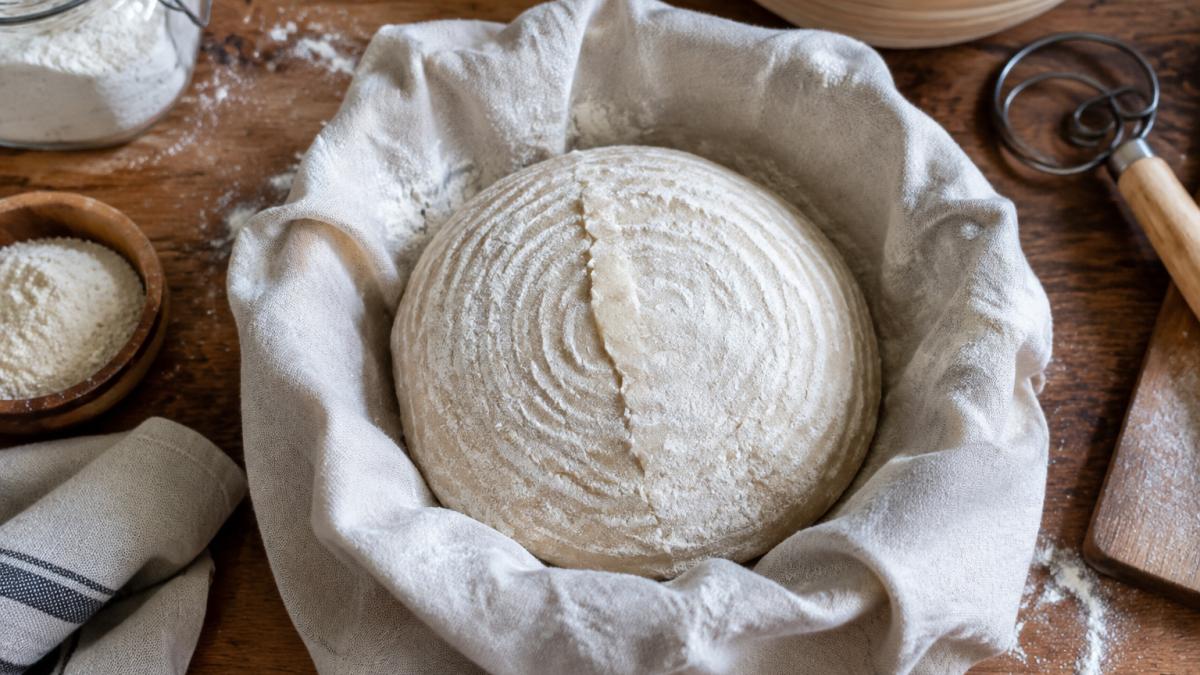
Step 1: Set Up and Flour the Cloth
Lay the cloth flat on your counter and dust it evenly with flour. Dust the cloth evenly with flour, paying extra attention to the center where the dough will sit. If you are unsure which size to cut or buy, our guide on what size proofing cloth for a sourdough boule walks through the measurements.
Experienced bakers often flour in two passes: a light overall dusting, then a heavier pinch in the center circle where the dough rests. The edges only need enough flour to keep the fabric from clinging to itself. With a tea towel rather than linen, go heavier than feels necessary; smooth cotton needs more flour to release cleanly.
Step 2: Place the Shaped Dough Seam-Side Up and Fold the Cloth
Set the boule in the center with the seam facing up. This is the opposite of a banneton, where the seam goes down. Our walkthrough on how to shape sourdough boules for beginners covers the preshape and final shape that make this step easy.
Treat the fold as a cradle, not a parcel. Bring the four corners up toward the center but do not knot them; tuck one corner under the dough on each side so the fabric forms a shallow bowl with soft walls.
Watch out: folding the cloth into a tight parcel traps humid air against the dough, softens the skin, and can leave crease marks that show after baking.
Step 3: Read the Proofing Cues and Time the Rise
A boule is ready when it looks puffy, not doubled. Press a floured finger gently into the side. If the dent springs back slowly and leaves a slight impression, it is ready. If it springs back fast, give it more time. If the dent stays, it has gone too far and should go straight into the oven.
Most kitchen-temperature rises land between one and three hours, but your dough decides, not the clock. A cooler kitchen lengthens the window; a warm one shortens it. High-hydration doughs often look ready sooner because they spread and puff visibly, while stiff doughs can be ready while still looking compact. Judge by the poke and by how the cloth sits: when the fabric looks stretched and the dough fills its cradle, you are close.
Step 4: Transfer the Boule Without Deflating It
Slide one hand under the cloth and use it as a sling. If you want a gentler landing, our guide on how to use a bread sling for sourdough shows a transfer method that keeps the round intact.
The safe transfer is a two-hand job. Slide your dominant hand under the cloth beneath the dough, palm up, and steady the far edge with your other hand.
If the boule deflates slightly during transfer, score it immediately and bake it anyway; oven spring recovers most of the height. If it misshapes, cup your floured hands around the sides and nudge it back toward round before scoring. Recovery beats starting over.
Score, then bake as usual.
Linen Cloth for Bread Proofing: Why Fabric Choice Matters
Linen is a traditional choice for bread proofing because its slightly rough, open weave can grip dough without fusing to it, and it absorbs moisture and releases it slowly.
Cotton runs a close second. A clean, lint-free cotton tea towel can work for a boule. The catch is that cotton can be too smooth, so dust it generously with flour.
Skip these:
- Terrycloth towels, which shed fibers into the crust
- Fabric softener, which coats the fibers and kills absorbency
- Synthetic blends, which trap moisture against the dough
Natural flax linen is a traditional choice for proofing cloths.
A Couche Cloth Alternative When You Don't Own a Couche
A couche cloth alternative does not have to be fancy. Any large, clean, unbleached cotton or linen fabric will do: flour sack towels, pillowcases cut open, plain cotton sheets. What matters is the weave and the flour, not the label.
Here is what to look for:
| Option | Best For | Watch Out For |
|---|---|---|
| Purpose-made linen couche | Repeated boule baking | Needs a dedicated storage spot |
| Cotton tea towel | One-off bakes, tight budgets | Too smooth, needs heavy flouring |
| Flour sack towel | Large batards and boules | Thin, can bunch under the dough |
| Unbleached cotton sheet | Very large loaves | Cut edges fray without hemming |
If you are building a full setup from scratch, our list of essential sourdough baking tools covers what else earns counter space.
One honest limitation: a thin tea towel will not hold a high-hydration boule as firmly as a proper couche. For wet dough, go with linen.
Flour Choice and Sticking Troubleshooting
Sticking is the number one complaint we hear about cloth proofing, and it almost always comes down to flour choice.
Use this order of preference:
- Rice flour: best release, especially for wet dough
- Rye flour: good grip, adds a rustic color
- Wheat flour: acceptable in a pinch, but stickier
Rice flour is mostly starch and does not hydrate the way wheat flour does, so it stays powdery on the cloth and acts like tiny ball bearings between fabric and dough.
Watch out: dusting the cloth once and calling it done is the mistake that ruins bakes. Re-flour between every loaf, and brush off caked patches before the next rise.
If dough has already stuck, do not yank. Slide a bench scraper under the edge and work the cloth free a few inches at a time.
Cloth vs. Banneton for Boules: Which Should You Use?
Cloth versus banneton comes down to the crust you want. A banneton is a woven basket that holds the dough and leaves spiral rings on the surface. A cloth gives you a smoother, more natural crust with no basket marks.
| Feature | Cloth / Couche | Banneton |
|---|---|---|
| Shape support | Good for round loaves | Excellent, rigid walls |
| Crust pattern | Smooth, rustic | Spiral rings |
| Storage space | Folds flat | Takes shelf space |
| Cost | Low | Higher |
| Best for | Boules, batards, baguettes | Tight, tall rounds |
For a boule, we reach for cloth most days. A banneton wins when you want a very tall, tight rise or a decorative flour pattern. Many bakers keep both, and that is fine.
How to Clean a Bread Couche and Store It Between Bakes
Learning how to clean a bread couche is simpler than most bakers expect: do not wash it after every bake. Linen is seasoned by flour and use. Scrape off dried dough with a stiff brush, shake it out, and hang it to air. A full wash strips the seasoning and stiffens the fabric.
Wash only when the cloth smells sour or feels tacky:
- Use warm water and a small amount of mild, unscented soap
- Skip fabric softener entirely
- Rinse well and air dry fully before folding
- Store folded in a dry drawer, never in a sealed bag
For food safety, keep raw-meat towels and proofing cloths separate. The USDA Food Safety guidance on kitchen cloths is clear that cross-contamination between raw food and ready-to-eat surfaces is a real risk, and dough counts as ready-to-eat.
Pick Up a Proofing Cloth and Bake Your First Cloth-Rested Boule
A round loaf needs a cradle, not a bowl. Set up the cloth, flour it well, place the boule seam-side up, gather the fabric loosely, read the rise, and flip it out gently. That is the whole method, and it turns a flat pancake into a loaf with real height.
At My Rustic Roots, we built our Bread Proofing Cloth - Reusable - 100% Cotton for exactly this job. It measures 35" x 30", so it wraps a boule with room to gather. It is lightweight and breathable, which protects the dough without plastic wrap.

Get started with My Rustic Roots and give your next boule the cradle it deserves.
Frequently Asked Questions
Should a bread proofing cloth be wet or dry?
Keep it dry. A bread proofing cloth works because the dry fabric surface holds a layer of flour that keeps the dough from sticking and lets it release cleanly. A damp cloth will make the dough tacky, cause sticking, and can encourage the crust to go leathery. The only exception is if you are covering dough during bulk fermentation and want to stop a skin forming, in which case a lightly damp towel over the bowl is fine, but the cloth touching the shaped boule should stay dry.
How do you keep dough from sticking to a proofing cloth?
Flour the cloth generously with rice flour or a 50/50 mix of rice and wheat flour, working it into the weave with your hand before the dough goes in. Rice flour does not absorb moisture the way wheat flour does, so it stays slippery through a long final proof. Also make sure your shaped dough has enough surface tension, since a slack, sticky boule will grab at the fabric no matter how much flour you use.
Can you proof a round loaf on a couche instead of in a proofing basket?
Yes, and it works well once you understand the setup. A couche is normally used for baguettes, but for a boule you line a bowl or colander with the cloth, flour it, and gather the overhang around the round of dough so the fabric cradles the sides. This supports the shape during final proof and gives you a banneton-style result without owning a basket. A 100% cotton cloth around 35 by 30 inches gives you enough overhang to gather comfortably.
How long should a boule proof on a couche?
Time depends on your kitchen temperature and how much starter you used, so judge by feel rather than the clock. At around 70 to 75 F, a shaped boule usually needs 1 to 2 hours at room temperature, or 8 to 12 hours in the refrigerator for a cold retard. The boule is ready when it looks puffy, has grown roughly 50 to 70 percent, and springs back slowly when you press it lightly with a floured finger.
