
Top 10 Essential Sourdough Baking Tools
Table of Contents
- Quick Comparison Table
- Sourdough Bread Making for Absolute Beginners: What You Actually Need
- Dough Handling and Mixing Tools
- Best Sourdough Scoring Techniques and Tools
- Proofing Baskets and Protective Covers
- Baking Vessels and Transfer Tools
- How to Maintain a Sourdough Starter and Track Progress
- Storage and Preservation Solutions
- Frequently Asked Questions
Last Updated: September 21, 2026
Quick Comparison Table
| Tool | Best For | Starting Price | Key Feature |
|---|---|---|---|
| Professional Baking Set | Complete beginners | $29.95 | 3-in-1 bundle (whisk, lame, scraper) |
| Danish Dough Whisk | Effortless mixing | $12.95 | 13" stainless steel coil with wood handle |
| White Magnetic Retractable Bread Lame | Precision scoring | $12.95 | Retractable blade + 5 replacements |
| Sourdough Starter Jar Kit | Tracking progress | $29.95 | 34 oz with feeding markings + starter |
| Bread Proofing Cloth | Bulk fermentation | $14.95 | Reusable cotton, 35" x 30" |
| Bread Sling | Safe transfer | $14.95 | 2-pack silicone, fits 7"-8.5" Dutch ovens |
| Beeswax-Lined Reusable Bread Bag | Long-term storage | $16.95 | Cotton exterior, beeswax interior |
Sourdough Bread Making for Absolute Beginners: What You Actually Need
Starting sourdough can feel overwhelming, but here's the truth: you don't need a kitchen full of specialty equipment to make excellent bread.
The sourdough baking tools that actually matter fall into three categories: mixing and handling, shaping and scoring, and storage. Everything else is optional. This guide covers the ten essential sourdough baking tools that will take you from starter activation through a finished loaf, without the clutter.
Before we dive into each tool, understand this: sourdough success depends more on technique and timing than on equipment. A quality dough whisk beats a fancy stand mixer for sourdough every time. A simple bread lame creates better scores than a razor blade held in your fingers. The right tools make the process safer, faster, and more consistent, but they won't bake the bread for you.

Dough Handling and Mixing Tools
Mixing sourdough dough by hand is part of the craft, but the right tools make it dramatically easier. You're working with stiff, hydrated dough that resists a wooden spoon. That's where specialized mixing tools come in.
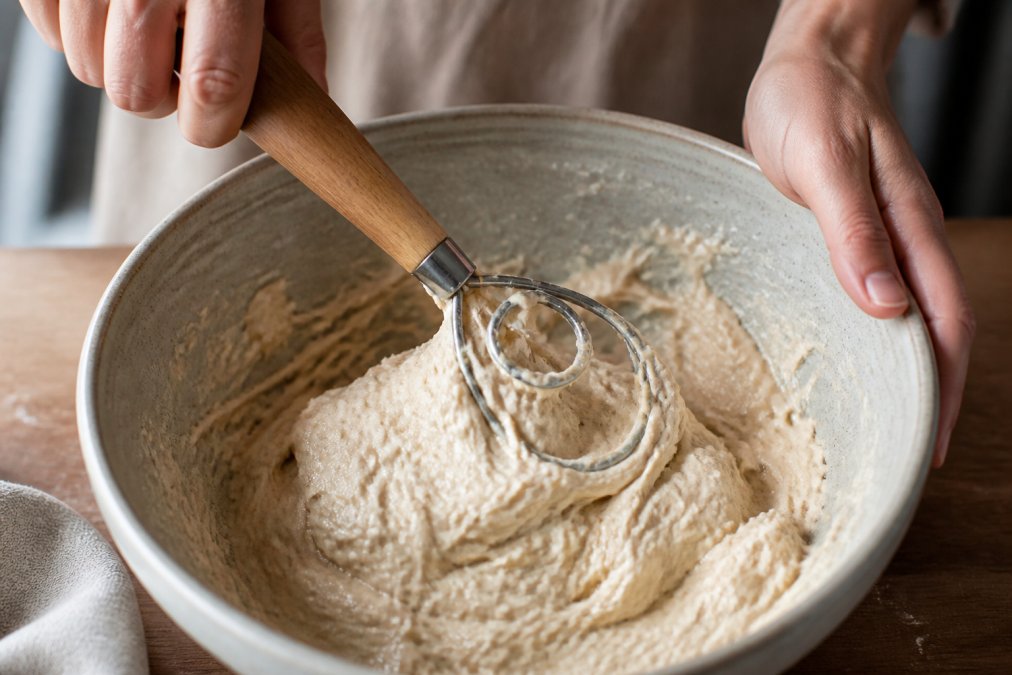
Danish Dough Whisk
The Danish dough whisk is the single best mixing tool for sourdough. Unlike a standard whisk, its open-wire design cuts through dense dough without clogging. The stainless steel coil flexes as you work, breaking up flour clumps and incorporating water evenly. A 13-inch length gives you the use you need without tiring your wrist.
The My Rustic Roots 13" Danish Dough Whisk ($12.95) features a smooth wood handle that won't slip when your hands are wet. The stainless steel coil resists rust and warping. Most bakers use this tool for the first 30 seconds of mixing, just enough to hydrate the flour and bring everything together. Then you switch to hand mixing, which develops gluten better than any tool can.
What makes it essential: It handles the hardest part of mixing, breaking up flour clumps when dough is driest. After that initial phase, your hands take over. You'll reach for this whisk every single bake.
Stainless Steel Dough Scraper
A dough scraper is your second hand during mixing and shaping. Use it to cut dough from the bowl, fold dough during bulk fermentation, portion dough before shaping, and clean your work surface. The flat, rigid blade gives you control that your fingers can't match.
The My Rustic Roots Stainless Steel Dough Scraper ($8.00) includes measurement markings and ruler lines engraved directly into the blade. This matters more than it sounds. You can divide dough into equal portions without a scale. For beginners who are still building confidence, this precision removes one variable from the equation.
The ergonomic handle has a non-slip grip that stays secure when dough is sticky. At 16 cm wide, it's the right size for most mixing bowls and Dutch ovens.
Wooden Sourdough Spoon
A wooden spoon is your primary tool for stirring and feeding your starter. The open design of the My Rustic Roots Wooden Sourdough Spoon ($16.00) lets you stir thick starter without resistance.
This tool bridges mixing and maintenance. You'll use it to stir your starter daily, blend flour and water before mixing dough, and occasionally fold dough during bulk fermentation. Its durability and comfort make it worth the investment.
Best Sourdough Scoring Techniques and Tools
Scoring is where sourdough transitions from home baking to artisan craft. A properly placed score gives your dough a controlled place to expand in the oven. Without it, your loaf splits randomly and loses its shape. With a clean score, you control the oven spring and create the distinctive ear that marks a well-made sourdough.
Scoring requires precision. Your blade must be sharp enough to cut cleanly without dragging through the dough. The angle matters, too steep and you tear the surface; too shallow and the dough doesn't respond. The two best tools for this are magnetic retractable lames and wooden lames.
White Magnetic Retractable Bread Lame
The retractable design of the My Rustic Roots White Magnetic Retractable Bread Lame ($12.95) solves the safety problem that exposed lames create. The blade retracts into the handle when you're not scoring, so you won't accidentally cut yourself during storage or cleanup.
The magnetic blade holder makes changing blades fast and simple. The set includes five stainless steel razor blades, so you have replacements when your blade dulls. A sourdough scoring guide is included to help you design your own patterns.
Professional Baking Set Dough Whisk →
The key advantage here is precision control. The retractable design lets you hold the lame at the exact angle you need, typically 30 to 45 degrees, without worrying about the blade slipping. For beginners, this confidence matters. You'll make cleaner cuts, which means better oven spring and more consistent results.
Wooden Bread Lame
For bakers who prefer a traditional feel, the My Rustic Roots Wooden Bread Lame ($12.95) offers the same precision with a more tactile experience. The natural wood handle feels warm in your hand and matches the aesthetic of artisan baking.
This lame includes a sharp scoring blade that's replaceable when it dulls.
Proofing Baskets and Protective Covers
During bulk fermentation and final proofing, your dough needs protection from the air and from drafts. A damp environment slows crust formation, which gives the dough time to rise fully. The tools for this job are simple but essential.
Bread Proofing Cloth
The My Rustic Roots Bread Proofing Cloth ($14.95) is a reusable alternative to plastic wrap. Made from 100% cotton, it's breathable enough to let moisture escape but dense enough to protect your dough. At 35" x 30", it covers multiple loaves or a large mixing bowl.
Baking Vessels and Transfer Tools
Getting your shaped dough into a hot oven safely is where many beginners stumble. A bread sling solves this problem completely. It's the difference between a perfectly shaped loaf and a misshapen mess.
Bread Sling for Safe Transfer
The My Rustic Roots Bread Sling ($14.95) is a 2-pack of silicone slings designed to fit 7" to 8.5" Dutch ovens. You place your shaped dough on the sling, then use the handles to lower it into your preheated vessel without touching the hot pot.
How to Maintain a Sourdough Starter and Track Progress
Your starter is a living culture that needs regular feeding and monitoring. The right jar and tools make maintenance simple enough that you'll actually stick with it.
Sourdough Starter Jar Kit
The My Rustic Roots Sourdough Starter Jar Kit ($29.95) includes a 34 oz clear glass jar with easy-to-read feeding and temperature markings printed directly on the side. The wide-mouth design makes it simple to stir, feed, and clean your starter without struggling to reach the bottom.
Storage and Preservation Solutions
After you've baked your sourdough, you need to store it properly. A fresh loaf stays best at room temperature for the first day, then in an airtight container or bag. The My Rustic Roots Beeswax-Lined Reusable Bread Bag ($16.95) is designed specifically for this job.
Frequently Asked Questions
What is the biggest mistake beginners make with sourdough baking tools?
Most beginners skip the bench scraper or dough whisk, thinking they can use kitchen utensils instead. This leads to torn dough, uneven mixing, and frustration. A dedicated bench scraper with measurement markings lets you portion dough evenly and handle it without sticking, while a proper dough whisk cuts through thick dough without clogging. These two tools alone transform the experience from messy to controlled.
Do I really need a proofing basket for sourdough?
No, a proofing cloth works just as well and costs less. The cloth's job is simply to protect your shaped dough from drying out during bulk fermentation and final proofing. A reusable cotton cloth does exactly that. The real essential is protecting your dough from air, whether that's with a basket, cloth, or even a shower cap. Choose based on space and budget.
How often should I replace my bread lame or scoring blade?
A quality bread lame blade stays sharp for dozens of loaves if handled carefully. Replace it when it no longer creates clean scores, you'll notice the blade dragging or tearing dough instead of slicing through it. The White Magnetic Retractable Bread Lame comes with five replacement blades, so you have backups ready. Store blades safely in their retracted position to extend their life.
What's the best way to maintain a sourdough starter jar?
A clear glass jar with feeding and temperature markings, like the 34 oz Sourdough Starter Jar Kit, makes maintenance simple. Feed your starter regularly on a schedule that matches your kitchen temperature, typically once or twice daily. The wide-mouth design makes cleaning easy, and the markings let you track rise and activity at a glance. Consistency matters more than perfection; even beginners succeed with a reliable jar and a simple feeding routine.
Can I use budget alternatives instead of buying specialized sourdough tools?
Some alternatives work; others don't. A regular kitchen knife won't score cleanly like a bread lame does, and a fork won't mix thick dough like a Danish whisk. However, a cloth napkin can replace a proofing cloth, and a wooden spoon can stir starter. Invest in the tools that directly affect dough handling and scoring, whisk, scraper, and lame, and save money on storage and proofing items where budget alternatives perform equally well.