
How to Choose Organic Non-GMO Flour for Better Bread
Last Updated: November 19, 2026
Quick Summary
Organic non-gmo flour delivers two distinct benefits: organic certification verifies the wheat was grown without synthetic pesticides, herbicides, or fertilizers under USDA-inspected rules, while non-GMO status confirms the crop wasn't genetically engineered. Together they mean fewer chemical inputs and no genetic engineering, though each claim must appear separately on the label.
- Organic certification is a legally enforced, inspected USDA standard; non-GMO is usually a voluntary third-party claim.
- Organic flour is never enriched, bleached, or bromated, since organic rules prohibit synthetic additives.
- Whole-grain organic flour is more perishable because the germ's oils go rancid; store it cool, dry, or frozen.
- A standard loaf uses roughly 3 to 4 cups of flour, about 12 to 17 ounces by weight.
- Introduce whole wheat gradually by swapping in a portion of your white flour and watching the dough respond.
Table of Contents
- What Organic Non-GMO Flour Actually Means on a Label
- Organic vs. Conventional Flour: A Side-by-Side Comparison
- Is Organic Flour Glyphosate-Free? Pesticides, Herbicides, and What Testing Shows
- Organic Whole Wheat Flour: Nutrition, Milling, and Baking Trade-Offs
- Is Organic Flour Enriched? B Vitamins, Iron, and Folic Acid Explained
- How Organic Non-GMO Flour Affects Dough, Flavor, and Loaf Volume
- Cost, Value, and Picking the Right Organic Non-GMO Flour for Your Kitchen
- Frequently Asked Questions
What Organic Non-GMO Flour Actually Means on a Label
The benefits of organic non gmo flour start with decoding two separate claims that shoppers often merge into one. Organic refers to how crops are grown and handled; non-GMO refers to whether the plant was genetically engineered. A bag can carry one label without the other, and at My Rustic Roots we see bakers assume the two are interchangeable all the time.
Organic certification in the United States is a verified, inspected process governed by the USDA National Organic Program. Non-GMO status, by contrast, is usually a voluntary claim verified by third-party programs or a manufacturer's own statement. One is a legal standard with farm inspections; the other is a sourcing declaration.
That distinction matters because it tells you what you're actually paying for. Organic speaks to pesticide and chemical inputs on the farm. Non-GMO speaks to genetics. Neither one automatically guarantees the other, so a label reading "organic non-gmo flour" is making two distinct promises.
Organic Certification vs. Non-GMO Verification
Organic certification is the stricter of the two. Farms must be inspected, keep detailed records, and follow the USDA National Organic Program standards covering soil, pest management, and prohibited substances. The USDA organic seal cannot legally appear without that certification.
Non-GMO verification is narrower. It confirms the crop wasn't genetically engineered, but it says nothing about pesticides, herbicides, or soil practices. A conventional wheat field could be non-GMO and still be sprayed heavily.
For bakers, the practical takeaway: if chemical inputs are your concern, organic is the claim that addresses it. If genetic engineering is your concern, look for non-GMO. Buyers who care about both should look for both on the same label. If organic sourcing is a priority for you, it helps to understand why an organic starter pairs naturally with organic flour.
Organic vs. Conventional Flour: A Side-by-Side Comparison
Organic and conventional flour differ mainly in how the wheat is grown, milled, and handled, not in the basic fact that both are wheat.
| Factor | Organic Non-GMO Flour | Conventional Flour |
|---|---|---|
| Crop production | Grown under certified organic rules; synthetic pesticides, herbicides, and fertilizers prohibited | Standard farming; synthetic inputs allowed within EPA tolerances |
| GMO status | Non-GMO by requirement of organic standards | May include genetically engineered crops, though wheat itself is not commercially grown as a GMO crop in the United States |
| Milling options | Often stone-milled; whole-grain and fresh-milled options common | Widely available; highly refined and roller-milled |
| Additives | No synthetic additives, bleaches, or enrichment permitted | May be enriched, bleached, or bromated |
| Price | Higher per bag and per serving | Lower per bag and per serving |
| Flavor | Earthier, more variable by harvest and mill date | Consistent, milder, more standardized |
| Shelf life | Shorter for whole-grain; rancidity risk in the germ | Longer, especially for refined white flour |
The trade-off is real. Conventional flour is cheaper and more predictable, which is why it dominates supermarket shelves. Organic non-GMO flour costs more because organic farming typically yields less per acre, requires more labor and record-keeping, and carries certification costs that conventional operations do not.
What most guides miss is that the gap isn't just price. First, the question people search most: is organic flour glyphosate-free?
A practical way to compare the two is to read the label the way an inspector would. On an organic bag, look for the USDA organic seal and the name of the certifying agent, which must appear on the package.
Watch out: a bag can be labeled organic and still be refined white flour with most of the bran and germ removed, so organic does not automatically mean whole grain.
Is Organic Flour Glyphosate-Free? Pesticides, Herbicides, and What Testing Shows
Organic flour is not automatically glyphosate-free in a technical sense, but organic rules prohibit the synthetic herbicides that contain glyphosate, so certified organic wheat is grown without them. That's the honest answer, and it's more useful than a flat "yes."
The confusion comes from how wheat is treated. Glyphosate is sometimes used as a pre-harvest desiccant on conventional wheat to dry the crop evenly before harvest. Organic standards bar that practice.
The EPA's overview of glyphosate regulation explains how the agency regulates such herbicides and sets residue tolerances. If avoiding synthetic pesticides, herbicides, and fungicides is your reason for buying organic, certification is the mechanism that enforces it, not a marketing phrase.
Here's the part that gets glossed over: "pesticide-free" is not a regulated term on a flour bag. Organic is. When you see "pesticide-free" without a certification, treat it as a claim, not a guarantee.
Organic Whole Wheat Flour: Nutrition, Milling, and Baking Trade-Offs
Organic whole wheat flour keeps the bran and germ that white flour strips away, which changes both its nutrition and how it bakes.
Milling method matters too. Stone-milled flour grinds the whole grain more gently and is often sold fresh, which many bakers prefer for flavor.
For a starter specifically, whole wheat and rye flours feed fermentation well because they carry more of the nutrients wild yeast and bacteria thrive on. If you're weighing which flours actually keep a culture healthy, our guide to the best flours for sourdough starter maintenance walks through the options.
A quick rule from our kitchen: introduce whole wheat gradually. Swap in a portion of your white flour rather than all of it, and watch how the dough responds before committing a whole loaf to it.
Is Organic Flour Enriched? B Vitamins, Iron, and Folic Acid Explained
Organic flour is not enriched, because organic standards prohibit the synthetic vitamins and minerals added during conventional enrichment. Enriched flour has thiamin, riboflavin, niacin, iron, and folic acid added back after milling strips them out.
That doesn't mean organic flour is less nutritious. Whole-grain organic flour never lost those nutrients in the first place, so there's nothing to add back. The enrichment process exists to restore what refining removes.
This is where labels confuse people. White organic flour is refined, so it has less natural B vitamin content than whole wheat, but it won't carry added folic acid either.
Folic acid is a genuine consideration for anyone planning a pregnancy, since conventional enriched grains are a primary source. If that applies to you, talk with a healthcare provider about your intake rather than assuming a flour swap covers it.
How Organic Non-GMO Flour Affects Dough, Flavor, and Loaf Volume
Organic non-gmo flour tends to produce a more flavorful loaf, but it demands more attention to hydration and fermentation than conventional flour. The differences show up in three places: how the dough feels, how it tastes, and how high it rises.
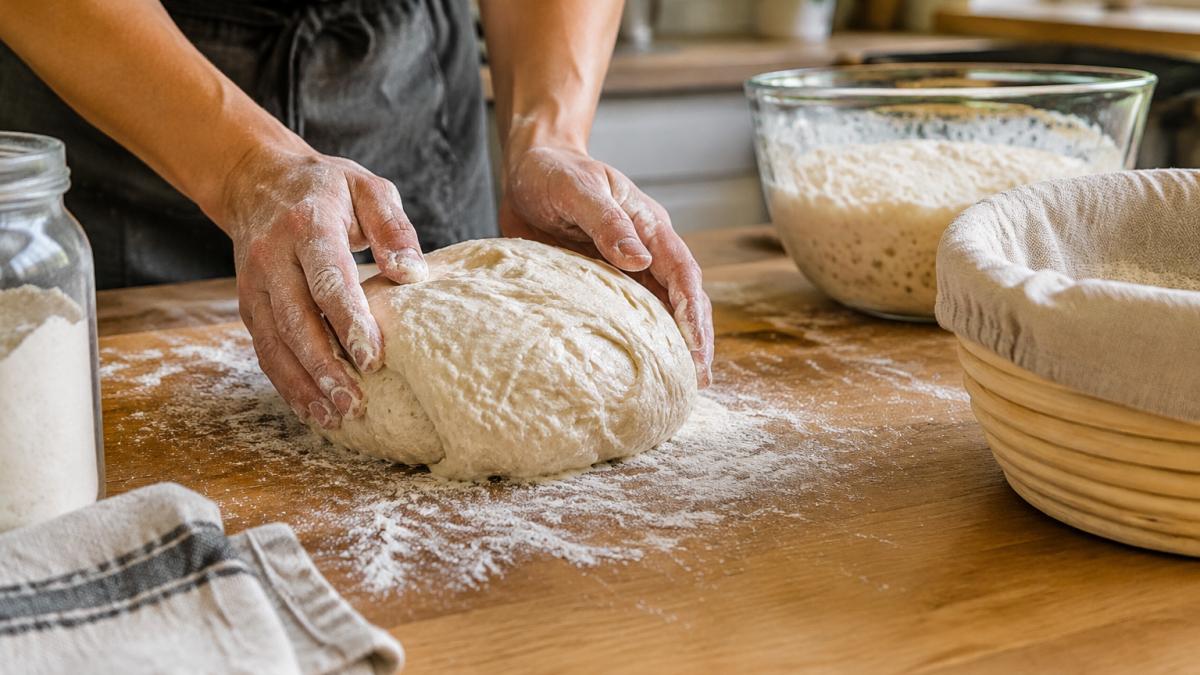
Protein content drives much of this. Whole-grain organic flours vary more from harvest to harvest than standardized conventional blends, so a recipe that worked last month may need a splash more water this month. That variability is the price of a less processed product.
Flavor is where organic whole wheat earns its keep. The bran and germ bring an earthier, nuttier taste that white flour can't match, and longer fermentation deepens it.
If your loaves are coming out heavy, the flour is often the culprit. Our breakdown of why your sourdough bread is dense and the fixes that work covers hydration, fermentation timing, and flour choice in detail.
Cost, Value, and Picking the Right Organic Non-GMO Flour for Your Kitchen
Organic non-GMO flour costs more per bag than conventional flour, and the value question is whether that premium earns its place in your kitchen. For most home bakers, the answer comes down to priorities: chemical inputs, flavor, and how much you bake.
A standard loaf of bread uses roughly 3 to 4 cups of flour, which is about 12 to 17 ounces by weight. If you know your bag price, divide it by the number of loaves you expect to get, and compare that to the price of a comparable loaf at the store. The math changes if you bake rarely, because a large bag that goes stale before you finish it erases the savings.
Buy in the quantity you'll actually use. Freshness matters more than a bulk discount, and a large bag that sits for months can go stale before you finish it. Check the milling date where available and store flour cool and dry.
Label reading is where the premium is either earned or wasted. Use this checklist before you buy:
- Certification: Look for the USDA organic seal and the certifying agent's name. For a non-GMO claim, look for a third-party verification mark rather than a manufacturer's own statement.
- Wheat type and extraction: The ingredient list should say whole wheat flour if you want the bran and germ. "Wheat flour" alone usually means refined white flour.
- Milling: Stone-milled and fresh-milled flours are often labeled as such; they tend to have more variable protein and ash, which affects hydration.
- Enrichment and additives: Organic flour will not be enriched, bleached, or bromated. If you see those words, the flour is not organic.
- Harvest or lot information: A milling or lot date tells you how fresh the flour is, which matters more for whole grain than for white.
- Protein content: Bread flour typically runs higher in protein than all-purpose, and whole wheat absorbs more water than either, so match the flour to the loaf you plan to bake.
For starter maintenance, the flour you feed your culture matters as much as the flour you bake with.
Watch out: chasing the cheapest organic bag without checking the milling date often means flour that's already past its best, which shows up as weak fermentation and a denser crumb.
Choosing flour is really a series of small decisions about what you want your bread to be, and the label is where those decisions start.
Frequently Asked Questions
Is organic flour better than non-organic flour?
It depends on what you want from it. Organic non-GMO flour is grown without synthetic pesticides, herbicides, and fungicides, and it cannot come from genetically modified crops. That matters if you want fewer chemical inputs in your food supply and clearer soil and biodiversity standards behind the grain. Nutritionally, the differences are smaller than most marketing suggests, and both types bake well. The practical case for organic comes down to farming method, label transparency, and personal priorities rather than a guaranteed health upgrade.
What does non-GMO flour mean, and is it the same as organic?
Non-GMO means the flour was milled from wheat grown from seeds that are not genetically engineered, and it is usually confirmed through a third-party verification program. Organic certification goes further: it requires non-GMO seed plus approved farming practices for soil, pest control, and inputs. In short, organic flour is always non-GMO, but non-GMO flour is not automatically organic. When you see both claims on a bag, you are getting the stricter of the two standards.
Is organic flour enriched with vitamins and iron?
Usually not. Enrichment adds B vitamins, iron, and folic acid back into flour after milling strips them out, and organic standards restrict which additives can be used, so most organic flours are sold unenriched. If you rely on enriched flour for folic acid or iron, check the label rather than assuming. Whole wheat and stone-milled organic flours keep more of the grain's natural nutrients, which is one reason bakers choose them for everyday loaves.
Is organic flour worth the extra cost for home baking?
For many home bakers, yes, but it helps to buy with a plan. Organic non-GMO flour carries a price premium because organic wheat costs more to grow and certify. Starters from My Rustic Roots run $10.95 to $14.95 and are made with organic, non-GMO flour and water. Buy organic flour in the quantities you will actually use, store it cool and dry, and compare cost per loaf rather than cost per bag.
