
How to Tell If Your Sourdough Starter Has Gone Bad
Last Updated: November 21, 2026
Quick Summary
A sourdough starter can go bad, but it is less common than people fear. Fuzzy, pink, orange, green, black or blue growth means it has spoiled and should be discarded. Gray liquid, a sour smell or a flat surface usually means it is only hungry and can be revived with regular feedings.
- Fuzzy or colored mold on the surface means the starter must be discarded.
- Gray liquid on top with a clean sour smell usually means the starter is dormant.
- Feed at a 1:1:1 ratio by weight and keep the jar around 75 to 80 degrees Fahrenheit.
- Watch for bubbles and rise within 12 to 24 hours to confirm a starter is recovering.
- Do not scrape off mold, because threads can spread below the surface.
Table of Contents
- Can a Sourdough Starter Actually Go Bad?
- Signs a Starter Is Healthy and Just Dormant
- Hooch, Mold, and Unusual Colors: What They Mean
- How Long a Starter Can Go Unfed, Refrigerated or Not
- Diagnostic Checklist: Is Your Starter Still Safe?
- How to Revive a Neglected Sourdough Starter Step by Step
- Keeping Your Starter Healthy Long Term
- Frequently Asked Questions
Most home bakers ask this question after a neglected jar sits on the counter for a week. A sourdough starter is a living culture of wild yeast and lactic acid bacteria, so it can weaken, stall or spoil. Still, a starter that looks rough is often only hungry. This guide will help you tell a dormant starter from a spoiled one, so you can decide whether to feed it, revive it or start over.
Can a Sourdough Starter Actually Go Bad?
A sourdough starter can go bad, but spoilage is less common than most people fear. The starter is a mix of flour, water and microbes that feed on the sugars in flour. When the food runs out, the microbes slow down or die back, and the culture changes in ways that look alarming.
The starter goes bad when harmful mold or other contaminants take hold. That is the real safety concern. A starter that only smells sharp or has a dark liquid on top usually just needs feeding.
- A starter that is sluggish is usually dormant, not dead
- A starter with fuzzy mold should be thrown out
- A starter that smells sour or boozy is often fine after a feeding
Signs a Starter Is Healthy and Just Dormant
A healthy but dormant starter shows fewer bubbles and less rise than usual. It may smell strongly sour, or like nail polish remover, and still be alive. These are signs of hunger, not spoilage.
Look for these signs of a starter that needs food:
- Little or no rise after feeding
- A flat, dense surface instead of a domed one
- Small bubbles, but not many
- A sour, tangy, or boozy smell
Many bakers find that one or two consistent feedings bring a dormant starter back. For a long-term setup suited to your baking style, see starter gift sets for rye bakers. Feed it at a regular ratio, keep it warm, and watch for bubbles within 12 to 24 hours.
Hooch, Mold, and Unusual Colors: What They Mean
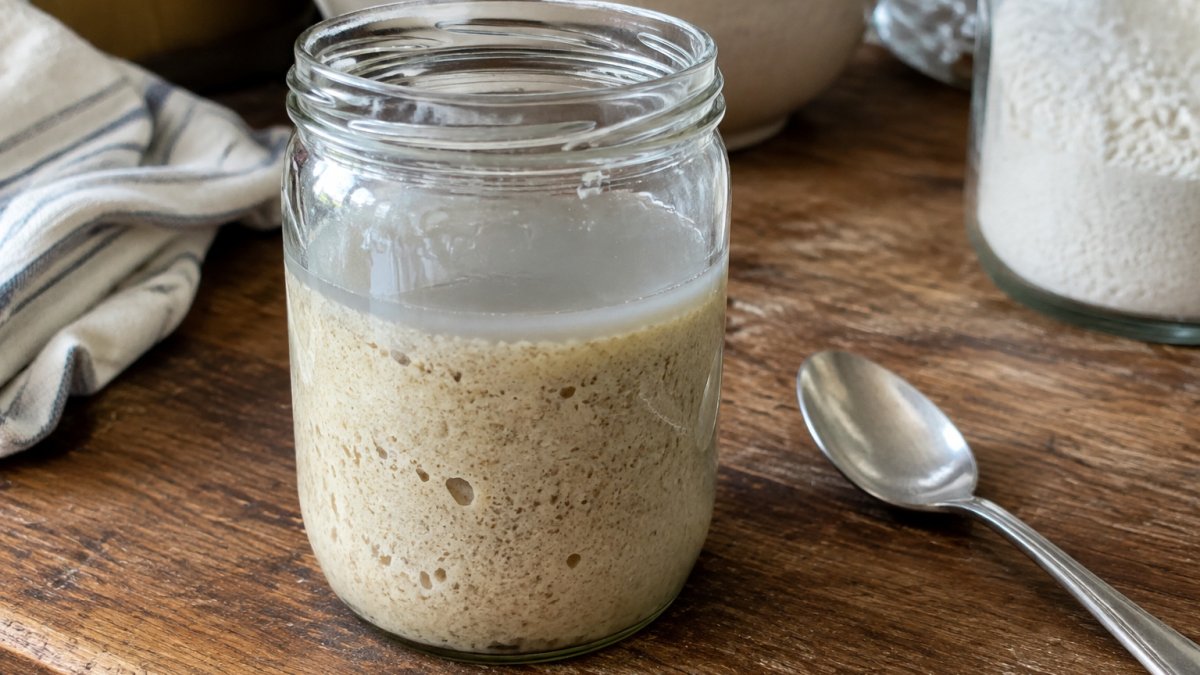
Hooch is a thin grayish or brownish liquid that collects on top of a starter. It forms when the starter runs out of food. Hooch is mostly alcohol and acid produced by the culture, and it is not a sign of mold. If your starter is runny or off, you can learn how to fix it rather than discard it in a guide to fixing a runny starter. You can pour it off or stir it back in. A starter with hooch and a clean sour smell is usually just hungry.
Mold is different, and it is the one sign that should end the debate. Mold looks fuzzy or powdery, and it may be white, green, black, blue, or pink. Mold grows on the surface and sends microscopic threads, called hyphae, down into the culture. That is why scraping off the visible patch is not safe: the mold you can see is only the fruiting body, and the threads below the surface can spread through the flour and water even when the top looks clean.
Pink or orange streaks are another warning sign. Those colors can indicate contamination by pigment-producing bacteria or molds, and they are not normal starter colors. Discard any starter with pink, orange, green, black, or blue growth, and wash the jar well with hot soapy water before starting over. Do not try to salvage the culture by feeding it heavily; feeding does not remove contamination.
A common pattern is that bakers confuse a dark crust on the rim of the jar with mold. Dried starter on the rim is normal and is not a reason to discard the culture. The distinction is texture and location: dried crust is hard and sits above the culture line, while mold is fuzzy and grows on the moist surface of the starter itself.
Watch out: if you see mold on the surface, do not scoop around it or stir it in. The safe move is to discard the starter and start fresh in a cleaned jar.
Spoilage vs. Dormancy: Comparison Table
| Sign | Dormant (Healthy) | Spoiled (Discard) |
|---|---|---|
| Surface | Flat or dome-shaped, with some bubbles | Fuzzy growth or spots |
| Liquid | Gray or brown hooch, which can be stirred in | Hooch with mold underneath |
| Color | Normal off-white or beige | Pink, orange, green, black or blue |
| Smell | Sour, tangy or boozy | Rotten, putrid or unpleasant |
| Response to feeding | Bubbles and rise within 12 to 24 hours | No activity after several feedings |
How Long a Starter Can Go Unfed, Refrigerated or Not
A starter kept at room temperature needs regular feeding, often once or twice a day. A starter stored in the refrigerator can rest for a week or longer between feedings. Cold slows the microbes down, so the culture survives longer with less food.
A neglected starter may still be alive after several weeks in the fridge. The longer it sits, the more likely it is to need several feedings before it becomes active again. A starter left unfed at room temperature for days will often show hooch and a strong smell.
Storage conditions change the outcome. A starter in a sealed container in the fridge usually lasts longer than an open jar on the counter. Mold is more likely in warm, humid kitchens.
Diagnostic Checklist: Is Your Starter Still Safe?
Use this checklist to decide what to do with your starter:
- Is there any fuzzy, colored, or spotted growth on the surface? If yes, discard it.
- Are there pink, orange, or unusual streaks? If yes, discard it.
- Is there only gray liquid on top with a clean, sour smell? If yes, it is likely dormant.
- Does the starter smell sour, tangy, or boozy after stirring? If yes, it is probably healthy.
- Does it bubble and rise within a day or two of feeding? If yes, it is recovering.
- Has it had no response after three feedings at a warm room temperature? If yes, consider starting over.
If you are unsure, feed it and watch. Clear signs of mold mean the starter is not safe to keep.
How to Revive a Neglected Sourdough Starter Step by Step
Reviving a starter takes patience, but the steps are simple. Use this method only for a starter that is dormant, not moldy. If you see mold, discard it and start over.
- Pour off any hooch on top, or stir it back in.
- Discard all but about 20 grams of starter.
- Add 20 grams of warm water and 20 grams of flour, and mix well. This is a 1:1:1 feeding by weight.
- Cover loosely and keep the jar somewhere warm, around 75 to 80 degrees Fahrenheit.
- Repeat this feeding every 12 to 24 hours.
- Watch for bubbles and rise within a few days.
A more structured schedule helps when the starter has been neglected for weeks. On day one, feed at 1:1:1 and note whether any bubbles appear within 24 hours. On day two, feed again at the same ratio and check for a domed surface. By day three or four, a recovering starter should show visible bubbles and a rise of at least half its starting volume within 12 hours. If it does, move to a 1:2:2 feeding (20 grams starter, 40 grams water, 40 grams flour) to build strength. If it does not, keep feeding at 1:1:1 every 24 hours and keep the jar warm.
Temperature matters more than most bakers expect. A starter at 75 to 80 degrees Fahrenheit ferments roughly twice as fast as one at 65 degrees. If your kitchen is cool, place the jar in an oven with the light on, or in a warm spot away from drafts. Do not exceed 85 degrees, which can stress the culture.
Once the starter doubles within 4 to 8 hours of feeding, it is ready to bake with. For a complete step-by-step path from a healthy starter to a finished loaf, see rye starter to sourdough loaf kit steps. Keep feeding at a consistent ratio to build strength. A starter that bubbles but does not rise is active but weak; it may still be safe, but it will not leaven bread well until it gains strength. To understand what a vinegar smell signals in a hungry but viable starter, read reasons your starter smells like vinegar.
Watch out: if the starter develops a pink or orange tint or fuzzy growth during revival, stop and discard it. Feeding a contaminated starter will not make it safe.
Our starters from My Rustic Roots are freeze-dried. The Organic Mature Sourdough Starter - 12g is a well-established, freeze-dried culture designed for faster activation and a milder flavor.

Keeping Your Starter Healthy Long Term
Good habits prevent most spoilage. Keep your starter in a clean jar, feed it on a steady schedule, and store it in the refrigerator if you bake only once a week. Label the jar with the date you last fed it so you always know how long it has been resting.
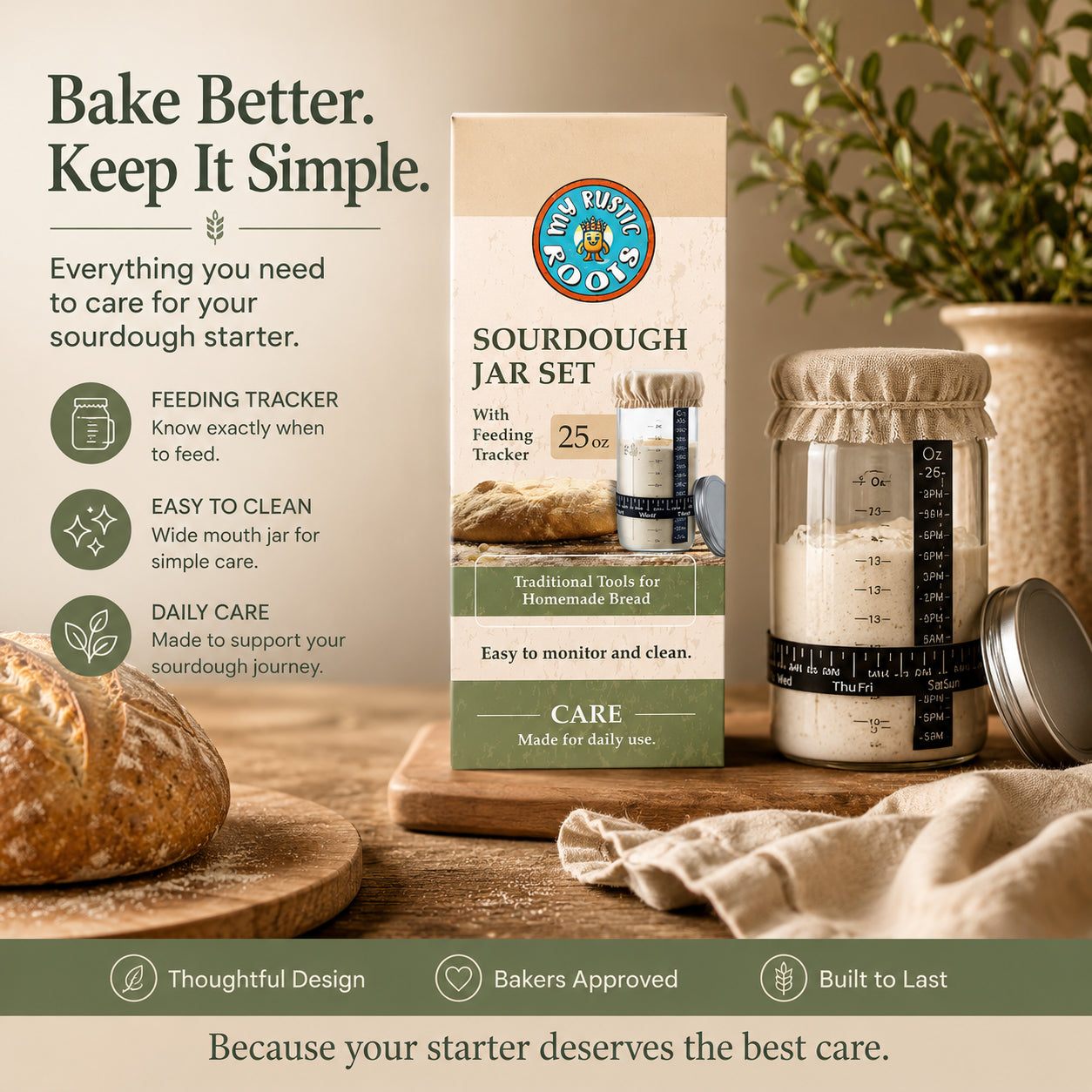
The Sourdough Starter Jar Kit - 25 oz with free bag of starter included includes a 25 oz glass jar with easy-to-read feeding and temperature markings and a wide-mouth design for easy cleaning.
Beginners who want a fuller setup can look at The First Loaf Box | Beginner Sourdough Starter & Baking Essentials Kit, which includes a sourdough starter culture, dough whisk, dough scraper, beginner sourdough guide, bread lame and a printed recipe.

For a starter that keeps performing, the best guide is your own jar. Watch it, feed it, and trust what you see.
Frequently Asked Questions
How do you know if your sourdough starter has gone bad?
A starter that has gone bad usually shows fuzzy mold in fuzzy colors such as pink, orange, green, or black, or a sharp acetone or rotten smell that does not improve after a couple of feedings. A layer of grayish or amber liquid, called hooch, is different: it signals that the starter is hungry and is usually safe to pour off and feed. When in doubt about mold, discard the starter and begin again with a fresh culture such as the My Rustic Roots Organic Mature Sourdough Starter, priced at $10.95.
Can refrigerated sourdough starter go bad?
A refrigerated starter can stay healthy for weeks or even months if it is fed occasionally, but it can still decline if it is ignored for too long. Cold slows fermentation, so the starter may look sluggish or develop more hooch. Bring it to room temperature, pour off any liquid, and feed it at least twice before judging whether it is still active. If it smells clean and rises after feeding, it is usually fine to bake with.
Can a sourdough starter die, or can it be revived?
A starter that has been neglected for a long time can often be revived, especially if there is no mold. Discard most of the starter, then feed it with a fresh flour and water mixture at a consistent ratio, such as one part starter to one part flour and one part water, every 12 hours at room temperature. Most starters regain activity within several days to a week of regular feedings. If you want a faster start, the Sure Start Fail-Proof Sourdough Starter Culture is listed at $14.95 and is described as offering faster, more reliable activation.
Is a layer of liquid on sourdough starter a sign that it has gone bad?
No. The liquid, known as hooch, is alcohol produced when the starter has run out of food. It is a sign of hunger, not spoilage. Stir it back in or pour it off, then feed the starter fresh flour and water. The starter is only a concern if the liquid is accompanied by mold, pink or orange streaks, or a smell that stays unpleasant after feeding.
