
How to Use a Dough Scraper for Sourdough Baking
Table of Contents
- What You'll Need Before You Start
- Step 1: Scrape the Dough Out of the Bowl
- Step 2: Gather and Coerce the Dough Into a Cohesive Mass
- How to Shape Sourdough With a Bench Scraper
- How to Handle Sticky Sourdough Dough
- Cutting, Portioning, and Transferring Dough
- Common Dough Scraper Mistakes and Troubleshooting
- Cleaning, Care, and Safe Handling
- Frequently Asked Questions
Last Updated: October 18, 2026
What You'll Need Before You Start
A dough scraper is a flat-bladed baking tool used to lift, move, divide, and shape sticky dough without tearing it. For sourdough, it replaces your hands in the messiest moments and gives you control that fingers alone cannot match.
Here is what to have ready before you start:
- A bench scraper with a stiff stainless steel blade and a straight edge
- A bowl scraper with a flexible curved edge
- A light dusting of flour in a small bowl
- A clean, dry work surface
- Your proofing basket or lined bowl nearby
The USDA Food Safety and Inspection Service guidance on handling food safely is a useful reminder to keep surfaces clean between bakes.
Bench Scraper vs Bowl Scraper: Which One Goes Where
A bench scraper is a stiff, straight-edged blade for working dough on a counter, while a bowl scraper is a flexible, curved blade for getting dough out of a round container. They are not interchangeable, and using the wrong one is a common beginner frustration.
| Feature | Bench Scraper | Bowl Scraper |
|---|---|---|
| Edge | Straight, rigid | Curved, flexible |
| Best for | Shaping, cutting, portioning | Scraping bowls, wet dough |
| Works on | Countertop | Inside a round bowl |
| Blade material | Stainless steel | Flexible plastic or steel |
| My Rustic Roots pick | Stainless Steel Dough Scraper ($8.00) | Flexible bowl scraper |
Our Stainless Steel Dough Scraper has a straight edge, a textured grip, and laser-engraved measurement markings, which makes even portioning much easier.

Step 1: Scrape the Dough Out of the Bowl
Start by loosening the dough from the bowl sides with a bowl scraper. Slide the flexible edge down the inside wall and pull it toward the center in one smooth motion.
Then tilt the bowl and let gravity help. Guide the dough toward the rim with the scraper and let it fall onto your work surface. Do not yank it. Wet dough tears when pulled.
If the dough clings, wet the scraper slightly and try again. A damp tool releases far more easily than a dry one.
Step 2: Gather and Coerce the Dough Into a Cohesive Mass
Next, gather the dough into one mass using the bench scraper. Slide the straight edge underneath the dough and fold the far side toward you. Rotate the dough a quarter turn and repeat.
This gentle coerce-and-fold motion does two things:
- It collects stray flour and shaggy bits into the main mass
- It begins building structure without overworking the gluten
Work gradually. Roughly six to eight folds usually brings a loose dough into a smooth, cohesive ball. Stop as soon as the dough holds together. Overworking at this stage makes the dough tight and hard to shape later.
How to Shape Sourdough With a Bench Scraper
Shaping is where a bench scraper earns its place in your kitchen. The tool lets you push and curve the dough against the counter without sticking to it or deflating it.
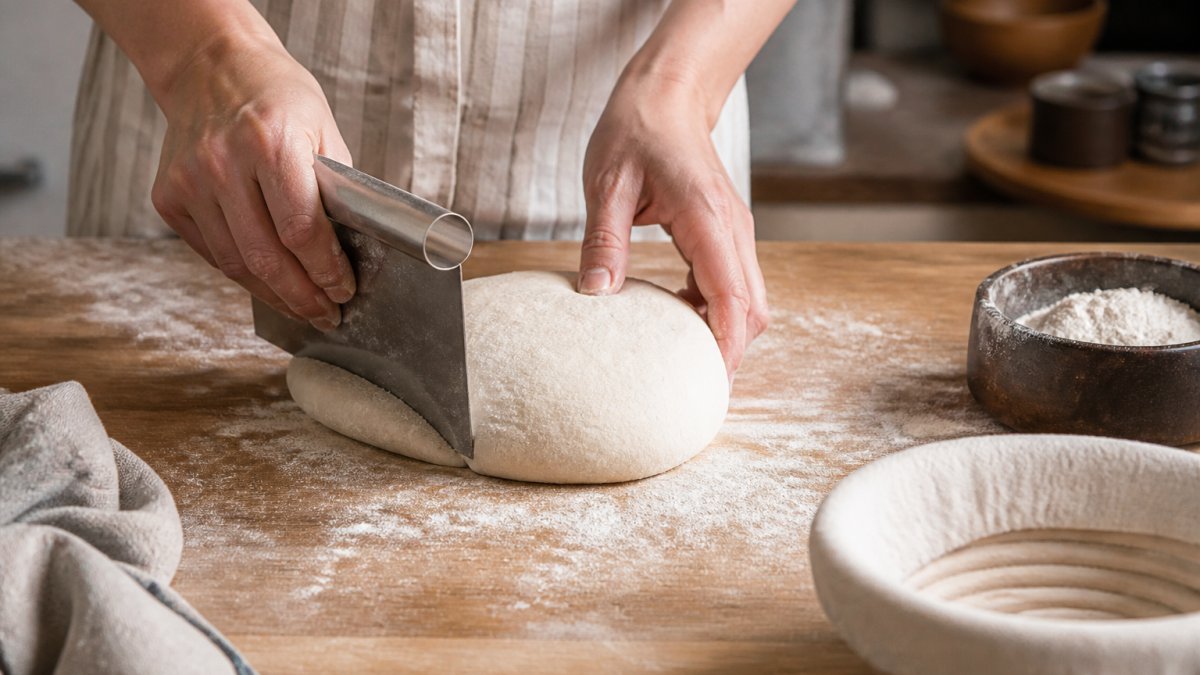
Here is the numbered technique we recommend:
- Lightly flour the counter and place the dough seam-side down
- Slide the scraper under the dough and lift one edge
- Push the dough away with the scraper while pulling it back with your free hand
- Rotate a quarter turn and repeat four to six times
- Stop when the top looks smooth and tight
Pre-Shaping Into a Round and Building Surface Tension
Pre-shaping turns a slack mass into a round loaf with a taut skin. Use the scraper to drag the dough toward you across an unfloured patch of counter. The drag creates friction, and that friction pulls the surface tight.
You want a taut ball with a smooth top and a gathered seam underneath. If the surface tears, you have pushed too hard. Rest the dough for a few minutes and try again more gently.
Stainless Steel Dough Scraper | Green →
How to Handle Sticky Sourdough Dough
Sticky dough is normal, especially once hydration climbs past roughly 75% (baker's percentage, water weight divided by flour weight).
Here is the practical sequence most experienced bakers use when the dough fights back:
- Wet the tool, not the dough. Dip the scraper blade in a bowl of water and shake off the excess. A damp stainless blade releases wet dough far more cleanly than a dry one. Re-wet every few passes as the blade picks up a film of dough.
- Keep the blade flat to the counter. Angle the scraper at roughly 15 to 30 degrees to the surface, not upright. A flat blade slides under the mass; an upright blade digs in and tears the gluten network.
- Push, don't pull. Move the dough away from you with the flat of the blade. Pulling toward your body stretches the dough thin and encourages tearing, especially on the first fold after bulk fermentation.
- Use short strokes and rotate. Work in 6- to 8-inch strokes, rotating the bowl or dough a quarter turn between passes. Long sweeping strokes drag and deflate.
- Let the dough rest. If the dough starts to feel tight or resists the scraper, stop for 5 to 10 minutes. The gluten relaxes, and the next pass will be easier. Fighting a tight dough with speed is the most common mistake.
For very wet dough, think ciabatta-style at 80% hydration or above, a flexible bowl scraper is the better tool.
A useful rule of thumb: if the dough is sticking to your hands more than the scraper, your hands are too dry or too warm. Wet your hands lightly and keep them cool.
Cutting, Portioning, and Transferring Dough
Dividing and moving dough is where a scraper saves the most frustration, but it is also where beginners lose the surface tension they just built. The goal is to cut cleanly, keep each piece's skin intact, and set it into the proofing basket without deflating it.
Cutting and Portioning
- Chill the dough briefly if it is warm. Ten to fifteen minutes in the refrigerator firms the surface and makes clean cuts easier, especially in a warm kitchen.
- Press straight down, one motion. Hold the bench scraper vertically and press the full blade through the dough in a single firm push. Do not saw back and forth, sawing drags the gluten and deflates the loaf.
- Weigh for consistency. For two even loaves, weigh the whole mass, divide by two, and cut to those weights on a kitchen scale. Ruler markings on the blade help with rough splits, but a scale is the reliable check. A typical home sourdough loaf is 800 to 1,000 grams of dough; rolls run 60 to 90 grams each.
- Cut on a lightly floured patch. A dusting of flour under the blade keeps the cut face from sealing to the counter. Too much flour and the pieces will not grip the surface during shaping.
Transferring Without Losing Tension
- Slide the scraper fully under the piece. Keep the blade flat and work it beneath the dough in one pass. A partially inserted blade lifts unevenly and tears the bottom.
- Support the top with your free hand. Cup your hand gently over the dough, do not press, so the piece stays together as you lift.
- Move slowly and set down gently. Lower the dough into the proofing basket seam-side up (for a round) or seam-side down depending on your shaping method. Drop it from even an inch and you will knock out gas.
- Do not re-shape after transfer. Once the dough is in the basket, leave it. Additional handling at this stage flattens the loaf.
If you are moving multiple pieces, work left to right and keep the un-moved pieces covered with a lightly floured towel so they do not form a skin. A common pattern is to cut all portions first, then transfer them one at a time, this keeps your hands free and your cuts consistent.
Common Dough Scraper Mistakes and Troubleshooting
Most scraper problems come down to technique, not the tool. Here are the fixes for the ones we hear about most.
| Problem | Likely Cause | Fix |
|---|---|---|
| Dough tears when lifting | Scraper not fully underneath | Slide deeper before lifting |
| Dough sticks to blade | Dry blade, wet dough | Wet the scraper slightly |
| Dough deflates when cutting | Sawing motion | Press straight down, one motion |
| Uneven portions | No measurement guide | Use ruler markings on the blade |
| Scratched countertop | Angled blade pressure | Keep the blade flat to the surface |
Cleaning, Care, and Safe Handling
Wash your scraper by hand with warm water and a little dish soap. Dry it right away, because dough residue left on stainless steel traps moisture and dulls the finish over time.
A few care habits keep the tool working for years:
- Scrape off dough residue before it dries
- Dry the blade fully after washing
- Store it flat, not blade-down in a drawer
- Check the handle screws occasionally and tighten if loose
Handle the blade with respect. The straight edge is thin and can cut a finger if you run your hand along it. Keep scrapers out of reach of children and store them blade-inward.
Sourdough handling gets easier the moment you stop fighting sticky dough with your bare hands. My Rustic Roots makes a Stainless Steel Dough Scraper with a non-slip handle, engraved measurement chart, and built-in ruler, so portioning and shaping stay consistent bake after bake.

Frequently Asked Questions
Do I really need a dough scraper for sourdough?
You can bake sourdough without one, but a dough scraper makes the messy stages much easier. A bench scraper lifts and turns wet dough without your hands sticking to it, and it scrapes dried flour and dough residue off the counter in seconds. For high-hydration dough, which clings to everything, it is the difference between a calm shaping session and a frustrating one. A stainless steel scraper with a straight edge and a comfortable grip covers scraping, dividing, and shaping. At around $8, it is one of the cheapest tools in a sourdough kit.
What is the difference between a bench scraper and a bowl scraper?
A bench scraper, also called a bench knife or dough scraper, has a straight stainless steel edge and a handle. It works on your work surface: scraping the counter, cutting and portioning dough, and shaping. A bowl scraper is a flexible, curved piece of plastic designed to bend against the inside of a mixing bowl. Use the bowl scraper to release dough from the bowl sides and the bench scraper for everything that happens on the counter. Many bakers keep both within reach.
How do you keep sourdough dough from sticking to a scraper?
Sticky dough usually means the scraper is dry or the dough is under-floured at the surface. Lightly wet the blade with water for wet, high-hydration dough, or dust it with flour for a drier dough. Work in short pushes rather than dragging the blade through the middle of the dough, and scrape the blade clean every few strokes. If the dough is genuinely too wet to gather, give it a 20-minute rest and try again. Time lets the flour hydrate and the dough firm up.
Are dough scrapers worth it for a beginner?
Yes, mainly because they remove two common beginner problems: dough stuck to the bowl and dough stuck to the counter. A scraper lets you gather a shaggy mass into a cohesive ball, lift it cleanly, and shape it without tearing. It also cleans your work surface fast, so you are not scrubbing dried dough later. Start with a stainless steel bench scraper with ruler markings so you can divide dough into even portions, and add a flexible bowl scraper for releasing dough from the mixing bowl.