
Sourdough Starter Gift Set for Rye Bakers: A Buyer's Guide
Last Updated: November 9, 2026
Quick Summary
A sourdough starter gift set for rye bakers needs a culture that already contains rye flour, a jar with markings, a dough whisk, and a guide explaining rye's faster fermentation. At My Rustic Roots, our boxes are designed with rye bakers in mind, from the $10.95 starter packet to the $76.95 Bread Lover's Gift Box.
- Rye flour ferments faster than wheat flour, so rye schedules run on a shorter clock.
- Activating a freeze-dried starter typically takes several days of feeding before the culture becomes active.
- For refrigerator storage, feed a rye starter once every 5 to 7 days.
- Rye absorbs water slowly, so a rye starter may loosen over the next half hour after mixing.
- Rye is not a gluten-free grain, so a rye sourdough starter is not suitable as a gluten-free gift.
Table of Contents
- What a Sourdough Starter Gift Set for Rye Bakers Actually Needs
- Choosing a Rye Sourdough Starter Kit: What's Inside and What It Costs
- How to Activate Freeze-Dried Sourdough Starter Without Wasting a Packet
- A Rye Sourdough Starter Feeding Schedule That Fits Real Life
- Rye-Specific Hydration Ratios and Why They Trip Up Wheat Bakers
- Allergy, Dietary, and Gluten Considerations Before You Gift
- Long-Term Storage, Preservation, and Packaging That Lasts
- Pick the Box That Matches the Baker You're Buying For
- Frequently Asked Questions
What a Sourdough Starter Gift Set for Rye Bakers Actually Needs
A sourdough starter gift set for rye bakers needs a culture that already contains rye flour, a jar with markings, a dough whisk, and a guide that explains rye's faster fermentation. At My Rustic Roots, our boxes are designed with rye bakers in mind.
Rye behaves differently from wheat from the first feed.
Rye flour ferments faster than wheat flour. Its wild yeast and bacteria become active sooner, and the dough turns sticky in a way that surprises bakers who learned on white flour. A kit built for wheat will still work, but the baker spends the first month fighting instructions that don't match what's happening in the jar.
Why Rye Changes the Kit List
Rye changes a few things about a starter kit. A starter containing rye flour ferments on a different curve than a wheat-only culture, rye starter can rise quickly, and rye schedules run on a shorter clock than wheat schedules.
If you want to understand how rye flour behaves before you judge what belongs in the box, our guide on using rye flour for sourdough starter walks through the fermentation differences.
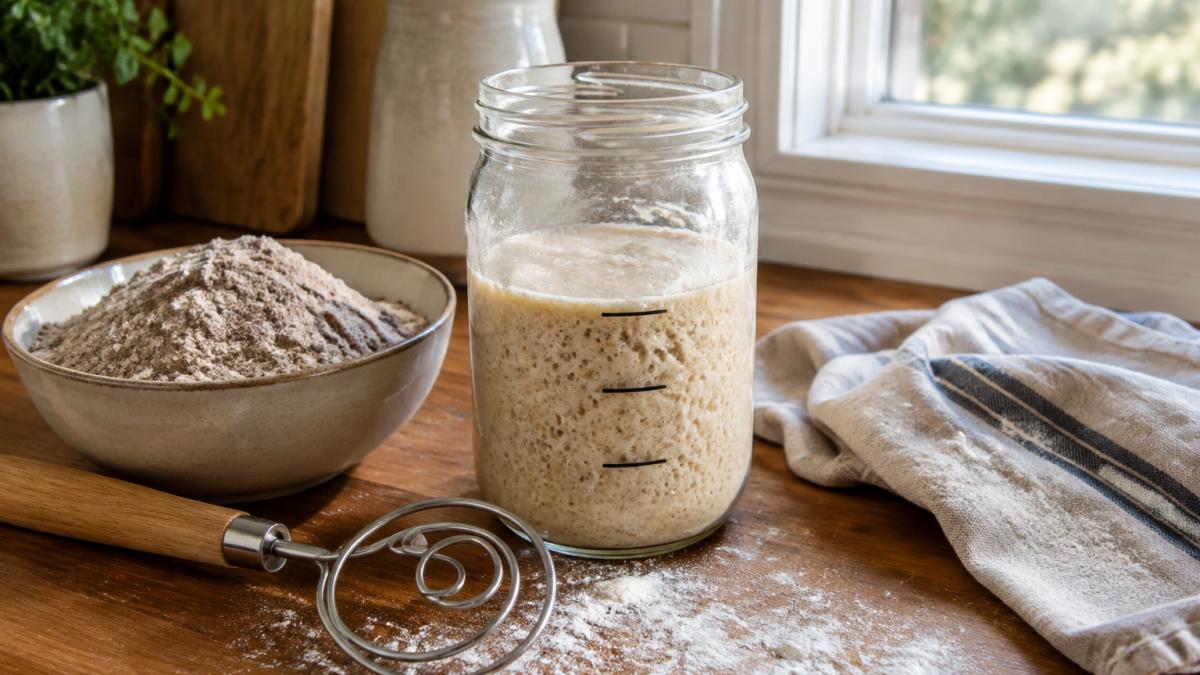
Choosing a Rye Sourdough Starter Kit: What's Inside and What It Costs
A rye sourdough starter kit should include a live or freeze-dried culture, a mixing tool, a scraping tool, a scoring lame, a proofing cover, and printed instructions. Prices across the category land anywhere from a single starter packet to a full boxed set with accessories.
Here is how our own boxes break down, so you can match the spend to the recipient:
| Kit | Price | What's Inside | Best For |
|---|---|---|---|
| Organic Mature Sourdough Starter, 12g | $10.95 | Freeze-dried culture only | Adding to tools they own |
| Sourdough Starter Jar Kit, 25 oz | $29.95 | Glass jar with markings, bonus starter packet | Someone who needs a vessel |
| The First Loaf Box | $44.95 | Starter, whisk, scraper, lame, guide, recipe | A true beginner |
| From Starter to Loaf Gift Box | $74.95 | Starter, whisk, scraper, lame, silicone sling, proofing cloth, guide, recipe | A complete first setup |
| The Bread Lover's Gift Box | $76.95 | Everything above plus a reusable bread bag and score sheet | A baker who already bakes |
Price
The Organic Mature Sourdough Starter is made with organic, non-GMO wheat flour and organic, non-GMO rye flour, and is offered as a 12g freeze-dried starter at $10.95.
How to Activate Freeze-Dried Sourdough Starter Without Wasting a Packet
Activating freeze-dried sourdough starter typically takes several days of feeding before the culture becomes active. The timing can be tricky for new bakers.
A general activation sequence looks like this:
- Day 1: Empty the packet into a jar. Add lukewarm filtered water and stir until no dry clumps remain. Cover loosely.
- Day 1, evening: Check for any sign of activity. Bubbles may not appear yet. That is normal.
- Day 2: Discard half, then feed with flour and water. Stir well and mark the jar level.
- Days 3 to 5: Repeat the discard-and-feed twice daily. Watch for the starter to rise within a few hours of feeding.
- Ready test: The starter is active when it doubles within four to eight hours of a feed and smells pleasantly sour, not sharp or like nail polish.
Using filtered water is a common precaution when feeding a starter.
For a fuller walkthrough, our step-by-step guide on how to activate freeze-dried sourdough starter covers the exact ratios and what to do if nothing happens by day four.
A Rye Sourdough Starter Feeding Schedule That Fits Real Life
Rye starters tend to move faster than wheat starters, so a room-temperature routine needs more attention, and refrigerator storage is a common choice for many households.
A baker with a full-time schedule may find a routine like this helpful:
- Room temperature, active baking: Feed every 12 hours, equal weights of starter, flour, and water.
- Room temperature, baking weekly: Feed once daily, then boost to twice daily two days before a bake.
- Refrigerator storage: Feed once every 5 to 7 days, let it sit out for an hour, then return it to the cold.
- Before a bake: Pull it out, feed it, and wait for it to double before mixing dough.
Our beginner guide to a sourdough starter feeding schedule lays out the timing in more detail if the recipient wants a printable routine.
Rye-Specific Hydration Ratios and Why They Trip Up Wheat Bakers
Rye dough and rye starter can absorb water differently than wheat, so a rye starter at equal weights of flour and water may feel looser than a wheat starter at the same ratio.
Rye absorbs water slowly. Mix a rye starter and it may look thick, then loosen over the next half hour as the flour hydrates. That delayed absorption is the reason a rye starter can seem fine at mixing and then overflow the jar an hour later.
Allergy, Dietary, and Gluten Considerations Before You Gift
Rye is not a gluten-free grain, so a rye sourdough starter is not suitable as a gluten-free gift. Before you buy, match the kit to the recipient's actual dietary needs rather than to the romance of a homemade loaf.
Here is the practical breakdown:
- Non-celiac gluten sensitivity: Tolerance varies widely and is not predictable from a gift box. Sourdough fermentation changes wheat dough in ways some people with mild sensitivity report tolerating better than commercial bread, but the evidence is mixed and the decision belongs with the recipient and their doctor. Our article on sourdough fermentation and gluten sensitivity explains what fermentation does and does not change, so you can hand them real information instead of a guess.
Long-Term Storage, Preservation, and Packaging That Lasts
Once the starter is active, storage options multiply. Here is how the main methods compare for a rye starter:
- Refrigerator (5 to 7 days between feeds): The default for most households. Keeps the culture alive with minimal attention. A starter that has been in the fridge for weeks needs two or three feeds before it is ready to leaven a loaf.
- Freezing in small portions: Divide a mature starter into 1- to 2-ounce portions on parchment or in ice cube trays, freeze solid, then transfer to a freezer bag. Thaw one portion and feed it two or three times to revive. Works well for bakers who bake once a month.
- Dehydrating: Spread a thin layer of fed starter on parchment and dry at room temperature or in a dehydrator on its lowest setting until it snaps. Crumble and store in a sealed jar. Rehydrate with water and flour and feed as you would a freeze-dried packet. This is the most shelf-stable homemade option.
- Freezing a whole jar: Possible but slow to thaw and easy to forget. Small portions are more practical.
Our comparison of long-term sourdough starter storage methods covers five approaches and which one suits a baker who bakes once a month versus once a week.
Pick the Box That Matches the Baker You're Buying For
Match the kit to the person and their experience level. A beginner with no tools may want a fuller setup, while an experienced baker who already has tools may only need the culture or the jar.
Here is the decision, in plain terms:
- Never baked before, no equipment: The First Loaf Box at $44.95 covers the essentials without extras they won't use yet.
- Wants the complete experience, including a sling and proofing cloth: From Starter to Loaf at $74.95.
- Already bakes, needs a bread bag and score sheet: The Bread Lover's Gift Box at $76.95.
- Has tools, just needs a culture: The 12g Organic Mature Sourdough Starter at $10.95.
- Needs a vessel with markings: The 25 oz Sourdough Starter Jar Kit at $29.95, which includes a bonus starter packet.
Best for: the giftee who has talked about sourdough but never started. Skip if: they already bake weekly and own the tools, in which case buy the culture alone.
My Rustic Roots offers small-batch, organic, non-GMO freeze-dried starters and baking tools. Our family-owned business makes sourdough starters and accessories designed to help you get started with homemade bread. Shop now to find a starter kit that suits your baking experience.
Frequently Asked Questions
What should a sourdough starter gift set for a rye baker include?
At minimum: a live or freeze-dried culture that lists rye flour in its makeup, a jar with readable feeding markings, a dough whisk, a scraper, a lame for scoring, and a proofing cloth. A printed guide matters more for rye than wheat because rye dough is stickier and behaves differently. My Rustic Roots' From Starter to Loaf Gift Box at $74.95 covers all of that plus a silicone bread sling, and the First Loaf Box at $44.95 trims it to beginner essentials.
Is a rye sourdough starter different from a regular sourdough starter?
The organisms are the same wild yeast and bacteria, but the flour they eat changes how they behave. A culture maintained on rye flour ferments faster and turns more acidic, which suits dense rye loaves. A wheat-fed starter will still raise rye bread, but you'll usually need to build a rye preferment first so the culture adapts. Check the ingredient list: My Rustic Roots' Organic Mature Sourdough Starter at $10.95 is made with both organic wheat and rye flour.
How long does it take to activate a freeze-dried sourdough starter?
Activation usually takes several days of regular feedings before the culture becomes active. Day one is typically rehydration with lukewarm water. Results can take time, so don't judge it on day one.
How do you feed and maintain a rye sourdough starter long term?
Once active, many bakers feed a starter regularly at room temperature or less often when refrigerated. The 25 oz Sourdough Starter Jar Kit at $29.95 includes a glass jar with feeding and temperature markings and a bonus starter packet.
