
Best Way to Store Sourdough: 7 Steps
Table of Contents
- Why Storage Matters for Sourdough Bread
- Step 1: Cool Your Sourdough Completely Before Storage
- Step 2: Choose the Right Storage Container
- Step 3: Store Cut Sourdough Bread Correctly
- How Long Does Sourdough Bread Last
- Freezing Sourdough Bread for Long-Term Storage
- Reviving Stale Sourdough Bread
- Common Storage Mistakes to Avoid
- Frequently Asked Questions
Last Updated: September 23, 2026
Why Storage Matters for Sourdough Bread
Proper storage helps you store sourdough fresh for days instead of hours. Sourdough's unique fermentation and structure mean the crust, crumb texture, and moisture content all change once the bread cools.
The right way to store sourdough prevents staling, mold growth, and moisture loss all at once.
Most bakers make two mistakes: wrapping warm bread in plastic (trapping condensation and creating a soggy crust) or leaving it exposed to air (making it hard and dry). Understanding what happens to bread after baking prevents both.
Step 1: Cool Your Sourdough Completely Before Storage
Never store warm bread. When you seal warm bread, steam condenses on the crust, creating a damp, chewy surface that loses its crisp quality.
Cool your loaf on a wire rack for at least two to three hours at room temperature. Air circulation prevents moisture from pooling underneath and keeps the bottom dry. Don't wrap the bread while it cools, let it sit uncovered so the crust firms up and the interior sets. Once it reaches room temperature, you can safely move it to storage.
Step 2: Choose the Right Storage Container
The container you choose determines how long your sourdough stays fresh and what texture you prefer.
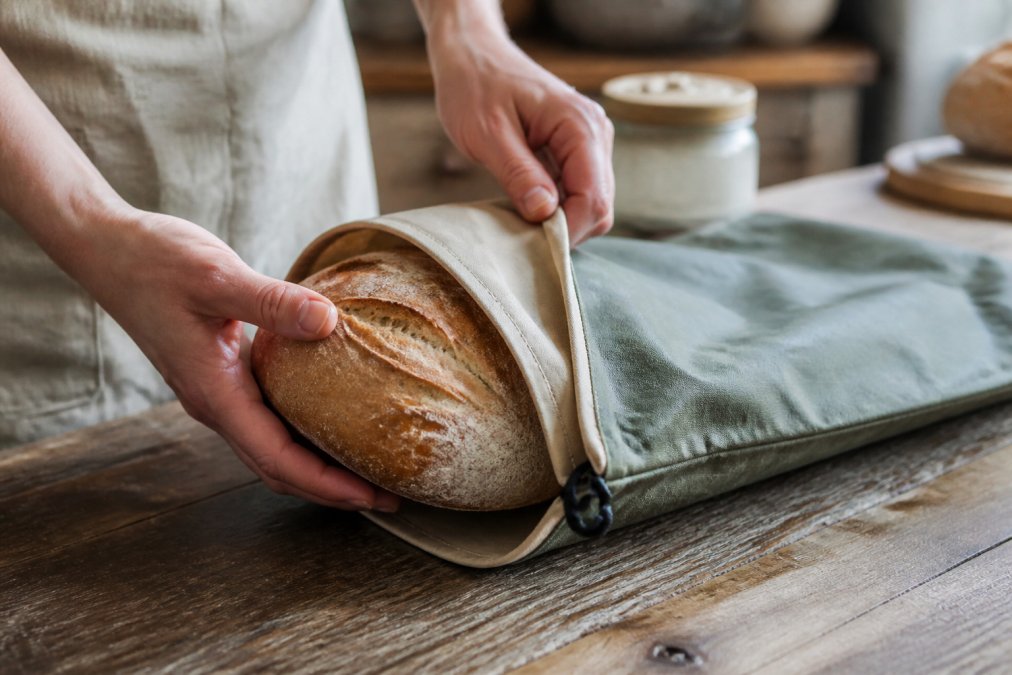
Beeswax-Lined Bread Bags for Room Temperature Storage
Beeswax-lined bread bags are the best choice for everyday room temperature storage. The semi-permeable beeswax coating allows air circulation while preventing condensation and excessive drying. Your sourdough stays fresh for three to four days in a beeswax bag.
The My Rustic Roots Beeswax-Lined Reusable Bread Bag is specifically designed for sourdough and artisan loaves. It features a cotton exterior with a beeswax-lined interior and a clip closure. The design accommodates different loaf sizes while keeping air exposure minimal. At just $16.95, it's a reusable alternative to disposable plastic bags.
To use a beeswax bag, place your cooled loaf inside and clip the top closed. Don't seal it completely airtight. The beeswax lining naturally regulates moisture. Store the bag on your counter or in a pantry where it's cool and away from direct sunlight.
Care is simple. Turn the bag inside out and wipe clean, or hand wash in cold water with mild soap. Air dry completely. Never use hot water or machine wash, as heat damages the beeswax coating.
Bread Boxes and Paper Bags
Bread boxes keep sourdough fresh for two to three days in a dark, enclosed space that maintains humidity. Paper bags are less effective but better than plastic for short-term storage. Both are single-use, while beeswax bags offer the same breathability with years of reuse.
Plastic Bags: When and Why to Use Them
Plastic bags trap moisture and create condensation at room temperature, avoid them. However, airtight plastic prevents freezer burn during long-term freezing, making it ideal for the freezer. For room temperature storage, use beeswax bags, bread boxes, or paper instead.
Step 3: Store Cut Sourdough Bread Correctly
Once sliced, exposed crumb surfaces dry out immediately and a cut loaf stales faster. Place cut bread cut-side down on a plate to reduce air exposure. For storage longer than one day, wrap loosely in a clean kitchen towel or place in a beeswax bag with cut-side down. Never use airtight plastic at room temperature, the combination of exposed surfaces and trapped moisture creates ideal conditions for mold growth.
How Long Does Sourdough Bread Last
Sourdough lasts longer than commercial bread because fermentation creates natural acidity that inhibits mold growth. However, storage duration varies significantly based on environmental conditions and bread type.
Standard Room Temperature Storage Timelines
At room temperature in a beeswax bag or bread box, sourdough stays fresh for three to four days. In a paper bag or cloth wrap, expect two to three days. By day four or five, the crumb becomes denser and crust harder, this is starch retrogradation, not spoilage.
How Climate Affects Storage Duration
High-Humidity Climates (above 60%): Moisture accelerates mold growth. Reduce storage by one day and avoid cloth wraps, use beeswax bags instead. Consider freezing after two days.
Arid Climates (below 30%): Low humidity accelerates staling but inhibits mold. Use a beeswax bag consistently or store in a sealed container with a small dish of water.
Moderate Climates (40-60%): Ideal for sourdough storage. Standard timelines of three to four days apply.
Beeswax-Lined Reusable Bread Bag →
Bread Type and Hydration Level
High-Hydration Loaves (75-80%): Open-crumb loaves stale faster, staying fresh for two to three days. Store in a beeswax bag and consider freezing after day two.
Standard Sourdough (70-75%): Three to four days at room temperature is typical.
Enriched Sourdough (with butter, eggs, or milk): Fat slows staling, keeping bread fresh for four to five days. However, higher fat content makes these loaves more prone to rancidity beyond two weeks in the freezer.
Freezer Storage for Extended Preservation
Freezing extends sourdough's life to two to three months. Freeze only after completely cooling. Slice first if desired, then wrap tightly in plastic or an airtight freezer bag, removing as much air as possible. Label with the date. Thaw on the counter for two to three hours without unwrapping, condensation forms on the bag, not the bread. You can also toast frozen slices directly without thawing.
Freezing Sourdough Bread for Long-Term Storage
Freezing sourdough extends its life to two to three months. This is the best option if you bake in batches or want to preserve bread longer than a week.
Freeze bread only after it's completely cooled. Slice the loaf first if you prefer. Sliced bread thaws faster and is easier to use in portions.
Wrap the bread tightly in plastic wrap or place it in an airtight freezer bag. Remove as much air as possible. Air exposure causes freezer burn, which damages the crumb texture. Label the bag with the date so you know how long it's been frozen.
To thaw, leave the bread on the counter for two to three hours. Don't unwrap it while thawing. Condensation will form on the outside of the bag, not on the bread itself. Once thawed, the crumb will be soft again, though the crust may be slightly less crisp than fresh bread.
You can also toast frozen sourdough slices directly. No thawing needed.
Reviving Stale Sourdough Bread
Stale sourdough isn't ruined. Understanding what causes staling and how to reverse it lets you rescue aging loaves.
The Science of Starch Retrogradation
Staling is starch retrogradation, starch molecules crystallize into a rigid structure, making bread denser. This accelerates in cool environments and slows at room temperature or in the freezer. Sourdough stales more slowly than commercial bread because fermentation inhibits crystallization. The good news: retrogradation is partially reversible. Heat breaks apart the crystallized starch, rehydrating the crumb and restoring softness.
Oven Refresh Method
Preheat your oven to 375°F. Wrap the stale loaf loosely in foil and bake for ten to fifteen minutes. The heat rehydrates the crumb and re-crisps the crust. For extra crispness, remove the foil in the last two minutes. This restores much of the original texture, though the crumb will be slightly denser because some retrogradation is permanent.
Toasting for Sliced Bread
For individual slices, toasting removes surface moisture and restores crispness. The firm texture works well for open-faced sandwiches and toppings.
Repurposing Stale Sourdough
Bread Crumbs: Dry stale slices in a 250°F oven for thirty minutes until completely hard. Pulse in a food processor into fine or coarse crumbs. Sourdough bread crumbs are superior to store-bought versions for coating proteins, topping casseroles, or adding to meatballs. The fermented flavor adds depth that commercial bread crumbs lack.
Common Storage Mistakes to Avoid
The biggest mistake is storing warm bread. Condensation ruins the crust within hours. Always cool completely before sealing any container.
| Storage Method | Duration | Best For | Crust Quality |
|---|---|---|---|
| Beeswax bag | 3-4 days | Daily use | Crisp |
| Bread box | 2-3 days | Counter display | Firm |
| Paper bag | 1-2 days | Short-term | Softer |
| Cloth wrap | 1-2 days | Sliced bread | Moderate |
| Freezer (plastic) | 2-3 months | Long-term | Restored when thawed |
Frequently Asked Questions
Does sourdough last longer in the fridge or on the counter?
Room temperature storage keeps sourdough fresher longer, typically 3 to 5 days with good crust integrity. Refrigeration slows mold growth but accelerates starch retrogradation, making bread stale faster. For best results, store sourdough at room temperature in an airtight or breathable container, then freeze if you need to keep it beyond 5 days.
What is the best way to store sourdough bread to prevent mold?
Cool your loaf completely, then store it in a breathable container like a beeswax-lined bread bag or bread box that allows air circulation while protecting from excess moisture. Keep it away from direct sunlight and humidity. Beeswax-lined bags balance moisture retention and air exposure to prevent both mold growth and dehydration.
Can I store sourdough in a plastic bag?
Plastic bags trap moisture and can promote mold growth, but they work for short-term storage (1-2 days) if your kitchen is dry. For longer storage, beeswax-lined bread bags are better, they're reusable, allow breathability, and help maintain crust integrity while keeping your sourdough fresh without relying on disposable plastics.
Is it better to freeze sourdough bread sliced or whole?
Freezing sourdough whole can be a good option. Slice it only after thawing if you need individual portions. Wrap tightly in plastic or foil before freezing to prevent freezer burn, and thaw at room temperature for 2-3 hours before reheating.