
Sourdough Starter Care Instructions: A Complete Guide
Table of Contents
- What You'll Need Before Starting
- How to Feed Your Sourdough Starter with the Right Feeding Ratio
- Establishing a Sourdough Starter Feeding Schedule
- How to Store Sourdough Starter in the Fridge
- How to Revive Sourdough Starter After Neglect
- Recognizing When Your Starter Is Ready to Bake
-
Troubleshooting Common Sourdough Starter Problems
- First, separate normal signs from contamination
- Problem: Starter isn't rising
- Problem: Starter rises and collapses too fast
- Problem: Starter smells like acetone or nail polish
- Problem: Starter is too thin or too thick
- Problem: Starter isn't doubling anymore
- Problem: I forgot to feed it for two weeks
- Conclusion
- Frequently Asked Questions
Last Updated: October 20, 2026
What You'll Need Before Starting
Proper sourdough starter care requires just a few basic tools and ingredients, most of which you probably already have.

Here's what matters most:
- A clean glass jar (at least 16-32 oz, preferably with a wide mouth)
- Flour (all-purpose, bread flour, or whole wheat all work)
- Filtered water (chlorine can interfere with fermentation)
Why glass? It lets you watch your starter bubble and rise without opening the jar.
Filtered water matters because chlorine can slow fermentation; if you only have tap water, let it sit overnight to let chlorine evaporate.
You don't need fancy equipment. Many bakers start with a mason jar and a wooden spoon. What matters is consistency, not gear.
How to Feed Your Sourdough Starter with the Right Feeding Ratio
The feeding ratio is the foundation of sourdough starter care: the proportion of starter to flour to water at each feeding, written by weight as starter:flour:water. Get it right and your starter becomes predictable; get it wrong and you'll fight slow rises or fast collapses.
The math behind the ratio
A 1:1:1 ratio means equal weights: 50 g starter + 50 g flour + 50 g water = 150 g total. Each feeding dilutes the old culture and gives it a fresh, equal-weight meal, which is why 1:1:1 is the standard maintenance ratio.
Here is how the same ratio scales for different starter amounts:
- Small jar (keep 25 g starter): 25 g starter + 25 g flour + 25 g water = 75 g total
- Standard jar (keep 50 g starter): 50 g starter + 50 g flour + 50 g water = 150 g total
- Large batch (keep 100 g starter): 100 g starter + 100 g flour + 100 g water = 300 g total
The rule is simple: whatever amount of starter you keep, add the same weight of flour and water. Always measure by weight, a cup of flour can vary by 20-30% depending on how it's scooped.
Common ratios and when to use them
- 1:1:1, daily maintenance at room temperature. Peaks in roughly 6-12 hours at 70-75°F. Best for bakers who feed once a day.
- 1:2:2, a milder, less sour starter that takes longer to peak (8-14 hours). Good for cool kitchens or bakers who want less acidity.
- 1:3:3 or 1:5:5, for very active starters, warm kitchens, or bakers feeding twice a day. More food per part starter means a longer runway before the culture gets hungry again.
Higher ratios aren't "better", they're a tool. Use a higher ratio when your starter peaks too fast; a lower one when it's sluggish.
How temperature changes the right ratio
Ratio and temperature work together: a 1:1:1 feeding at 80°F may peak in 4-6 hours, while the same ratio at 65°F may take 12-16 hours. In a warm kitchen, move to 1:2:2 or 1:3:3 to slow the culture; in a cool kitchen, stay at 1:1:1 and expect a longer rise.
A worked example
Suppose you want to bake tomorrow morning and your recipe calls for 100 g of active starter. The night before, keep 50 g of starter, add 50 g flour and 50 g water (1:1:1), and leave it at room temperature. By morning it should be domed and bubbly. If your kitchen is warm and it has already collapsed, next time use 1:2:2, keep 25 g starter, add 50 g flour and 50 g water, so it peaks closer to bake time.
Establishing a Sourdough Starter Feeding Schedule
A feeding schedule tells you when to feed your starter.
Room temperature (68-75°F): Feed once or twice daily.
Room temperature (75-80°F): Feed twice daily. Warm temperatures speed fermentation, a starter at 80°F peaks in 4-6 hours instead of 8-12.
Room temperature (below 65°F): Feed once daily, or every other day.
Feed when your starter is active and bubbly, not sluggish.
How to Store Sourdough Starter in the Fridge
Refrigerating your starter slows fermentation dramatically, useful when you don't bake often or need a break from daily feeding.
To refrigerate:
- Feed your starter as normal
- Let it sit at room temperature for 1-2 hours
- Cover it loosely and place it in the fridge
- It will keep for 2-4 weeks without feeding
The cold slows the wild yeast and bacteria, and your starter enters a dormant state, using very little food.
Why this works: At refrigerator temperature (around 40°F), fermentation nearly stops. It's not dead, it's sleeping.
You can refrigerate a starter that's freshly fed or one that's been sitting out a while.
How to Revive Sourdough Starter After Neglect
A neglected starter, forgotten in the fridge for weeks or left out without feeding, can often be revived.
Signs your starter needs revival:
- A dark liquid (called hooch) sitting on top
- A pinkish or orange tint (mold, discard it)
- No activity for several weeks
The dark liquid is alcohol produced by the yeast.
Sourdough Starter Jar Kit – 25 oz with free bag of starter included →
Revival steps:
- Remove the hooch (or stir it in, your choice)
- Discard half the starter (or all of it if it smells off or shows mold)
- Feed with fresh flour and water using your normal ratio
- Wait 24 hours and feed again
- Repeat daily until it shows consistent bubbles and rise (usually 3-7 days)
Most starters show signs of life within 48 hours, a few bubbles, maybe some rise.
If your starter shows no activity after 7 days of daily feeding, it may be dead.
Recognizing When Your Starter Is Ready to Bake
An active starter is fed, bubbly, and ready to leaven bread.
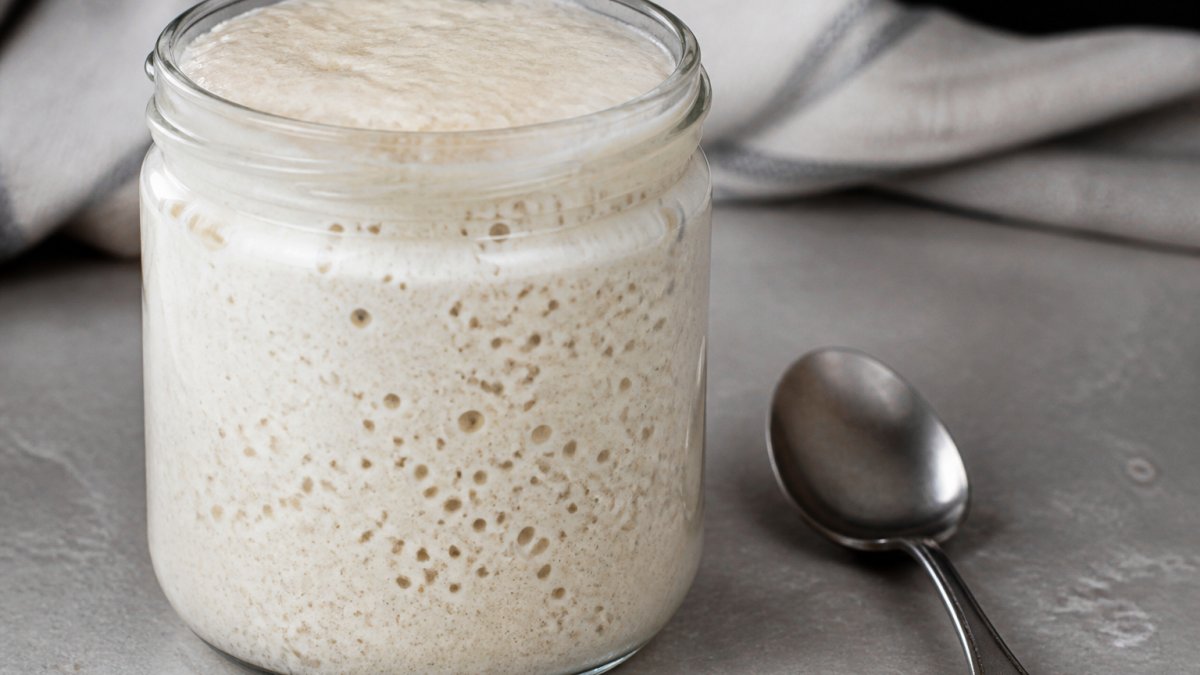
Visual signs your starter is ready:
- It has roughly doubled or tripled in size since feeding
- The surface is covered with bubbles (large and small)
- It smells pleasantly sour and yeasty
The float test: Drop a small spoonful of starter into a glass of water. If it floats, it's full of gas and ready to use.
Timing: Most starters peak 8-12 hours after feeding at room temperature.
The best time to bake is at peak activity, bubbly, risen, and just starting to fall back down.
Troubleshooting Common Sourdough Starter Problems
Even a well-cared-for starter will throw you a curve now and then. Diagnose before you react: most "problems" are normal fermentation signals, and only a small set are true safety issues.
First, separate normal signs from contamination
Normal, safe fermentation signs include:
- Hooch, a clear to dark amber liquid on top. This is alcohol produced when the yeast runs out of food. It is harmless. Stir it in for a sourer flavor or pour it off for a milder one, then feed.
- A sharp, sour, or acetone-like smell, a sign of active fermentation and hunger, not spoilage. It fades as you feed on schedule.
- A thin, dark crust or dried ring on the jar, just dried starter. Wipe the rim; it is not mold.
Signs that call for discarding the starter:
- Pink, orange, or fuzzy green-blue patches anywhere on the surface or sides. These are mold or unwanted bacteria. Do not scrape them off and hope, discard the whole starter, wash the jar in hot soapy water, and start fresh or use a new culture.
- A smell like rotting meat or sewage that persists after a feeding. Sour is fine; putrid is not.
- Slimy, stringy, or pink-tinged liquid rather than normal hooch.
When in doubt, throw it out. A starter is cheap to restart; a spoiled batch of bread is not worth the risk.
Problem: Starter isn't rising
This is almost always temperature or maturity, not a dead culture. A brand-new starter needs 5-7 days of consistent feeding before it reliably doubles. In a cool kitchen (below 65°F), move the jar to a warmer spot, the top of the refrigerator, a sunny counter, or an oven with only the light on. If it still has not risen after a full week at 70-75°F, try a 1:2:2 ratio for more food and a longer runway.
Problem: Starter rises and collapses too fast
A starter that peaks in 3-4 hours and collapses is over-fed or too warm. Reduce the feeding ratio (go from 1:2:2 back to 1:1:1), move it to a cooler spot, or feed less often. A starter that peaks and falls within a few hours is still usable at its peak, just bake sooner.
Problem: Starter smells like acetone or nail polish
This is a hunger signal, not spoilage. The culture has consumed its food and is producing alcohol. Feed it, and if the smell returns quickly, increase feeding frequency or use a larger ratio. The smell usually fades once a routine is established.
Problem: Starter is too thin or too thick
Adjust water, not flour, first. If it pours like pancake batter, reduce the water in your next feeding by about 10-20%. If it is stiff like cookie dough, add water a tablespoon at a time. The target is thick yogurt or oatmeal consistency, thick enough to mound on a spoon but still pourable.
Problem: Starter isn't doubling anymore
Your culture may have outgrown its jar or your ratio. Switch to a larger jar (at least double the starter's volume) and try 1:2:2 or 1:3:3. A very active starter can consume a 1:1:1 feeding in a few hours, leaving nothing for later. More food per part starter gives it a longer, stronger rise.
Problem: I forgot to feed it for two weeks
Don't panic. Pour off the hooch, discard all but a tablespoon, and feed daily for 3-5 days. Most starters recover. If there is no activity after a full week at room temperature, the culture may be dead, but that is uncommon.
Conclusion
Caring for a sourdough starter is straightforward once you understand the basics: feed it consistently, keep it at the right temperature, and learn to recognize when it's ready to use.
That's where My Rustic Roots comes in.
Whether you use our starter or one you've cultivated yourself, consistent feeding, the right temperature, and attention to visual cues are all you need to keep it healthy and active.
SHOP NOW and get started with a starter kit that's designed for real home bakers. Your first loaf is closer than you think.
Frequently Asked Questions
How often should I feed my sourdough starter at room temperature?
At room temperature (68-75°F), feed your starter once or twice daily, depending on how quickly it rises and falls. Most bakers feed once daily using a 1:1:1 ratio (equal parts starter, flour, and water by weight). If your starter doubles within 4-8 hours and then collapses, it's ready for a second feeding. Consistency matters more than exact timing, establish a routine that fits your schedule and watch your starter's behavior to adjust.
What is the recommended feeding ratio for a sourdough starter kept in the refrigerator?
For refrigerated storage, use a 1:5:5 ratio (1 part starter to 5 parts flour to 5 parts water by weight). This dilute ratio slows fermentation, allowing your starter to stay healthy for 1-2 weeks between feedings. Before baking, remove it from the fridge, feed it with a 1:1:1 ratio at room temperature, and wait 4-8 hours until it doubles and shows active bubbles. This reactivation step rebuilds strength and ensures reliable rise.
How can you tell when a sourdough starter is ready to use for baking?
A ready starter shows clear signs of activity: it has doubled or tripled in size since feeding, displays visible bubbles throughout, smells pleasantly sour (not acetone-like), and passes the float test (a small spoonful floats in water). These cues indicate peak fermentation, the wild yeast and lactic acid bacteria are active and strong. Timing matters; use it within 2-4 hours after it peaks, before it begins to deflate.
What should I do if my sourdough starter smells like acetone or nail polish remover?
That smell is hooch, a layer of liquid alcohol produced by hungry bacteria. It's harmless and actually a sign your starter needs feeding. Stir it back in or pour it off, then feed immediately with your regular ratio. If hooch appears frequently, increase feeding frequency or use a more dilute ratio. Consistent feeding prevents this buildup and keeps your starter balanced and pleasant-smelling.